 Aviator
 Cat-eye
 Square
 Oval
 Rectangular
 Round
Acetate Sheet Grades Explained: How Material Choice Shows Up in Your Returns Rate
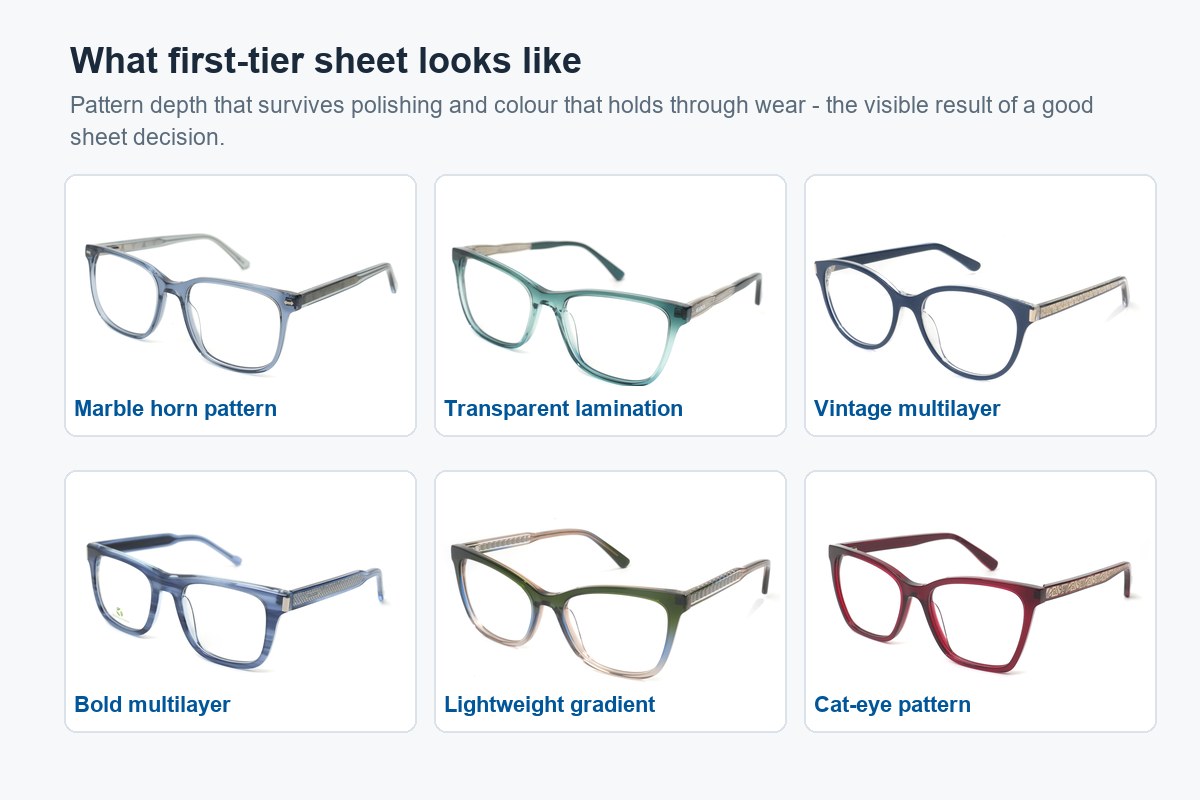
Two acetate frames can share a silhouette, a colourway and even a price band — and still behave like different products six months later. One keeps its gloss and its tortoise depth; the other crazes at the hinge seats and fades where the nose pads rub. The variable is usually decided before either frame exists: the grade of acetate sheet the programme was built on.
Why Acetate Sheet Grade Outranks Unit Price
Sheet is the largest material input in an acetate frame and the one with the widest quality spread — from top-tier cast Italian and first-tier Chinese production down to small extrusion shops whose output varies batch to batch. The per-frame cost difference between tiers is modest, often under a dollar at wholesale quantities, but it compounds through milling tolerance, polish response and colour depth into the defect rate your customers experience. And since a programme is quoted against a sheet tier whether or not the buyer asks, the question is not whether the factory will choose your sheet — it is whether you chose it first.
Four Indicators That Separate Sheet Grades
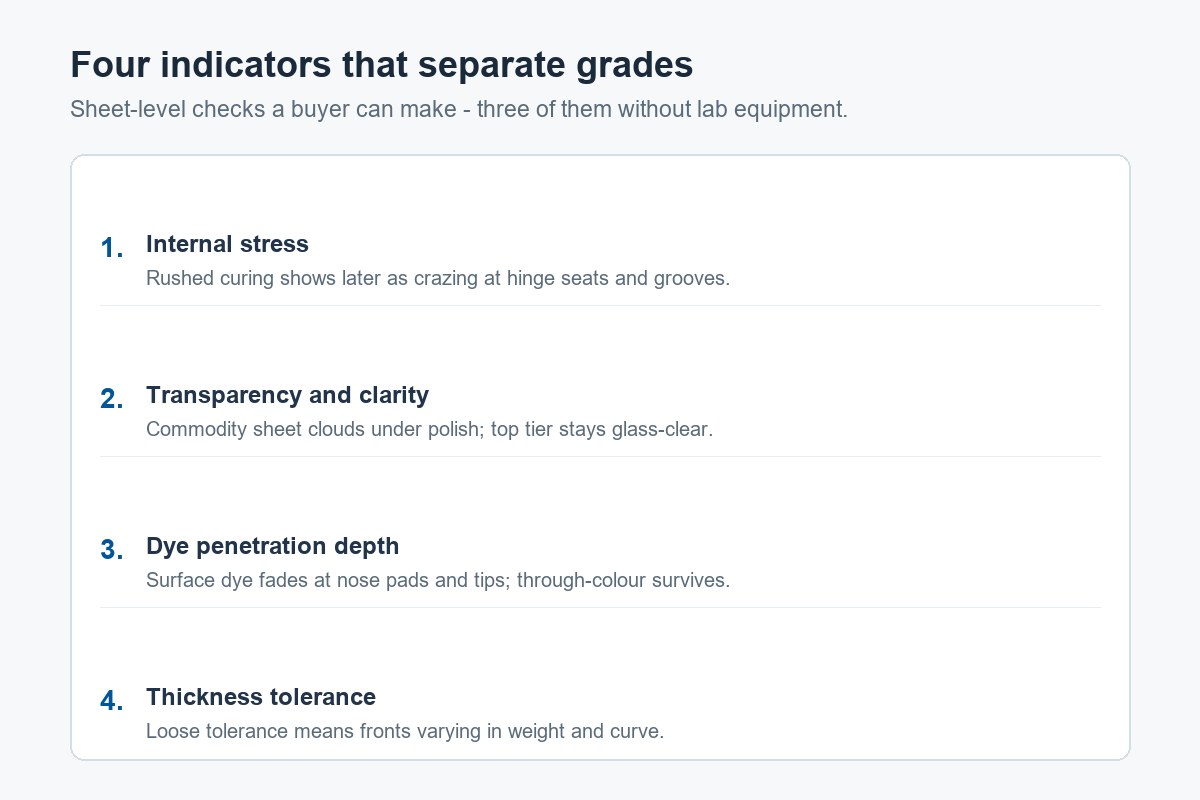
- Internal stress. Sheet that was cured or annealed in a hurry carries locked-in stress that releases during machining and forming. Symptom downstream: fine crazing around hinge seats and lens grooves appearing weeks after delivery — the classic "arrived perfect, cracked later" complaint.
- Transparency and clarity. Top-tier sheet is glass-clear in its crystal states with no haze or specks; commodity sheet clouds under polish. Symptom: frames that look dull on the shelf before they are even worn.
- Dye penetration depth. In well-made sheet, colour runs through the material body; in cheap sheet it is a deep skin. Symptom: colour wear exactly where frames rub — nose pads, temple tips — and pale scratches that refuse to repolish out.
- Thickness tolerance. Precision sheet holds its stated thickness across the block; loose sheet drifts. Symptom: fronts within one bulk order varying visibly in weight and curve, and lens grooves that seat inconsistently.
Grade to Defect to Returns: The Mapping
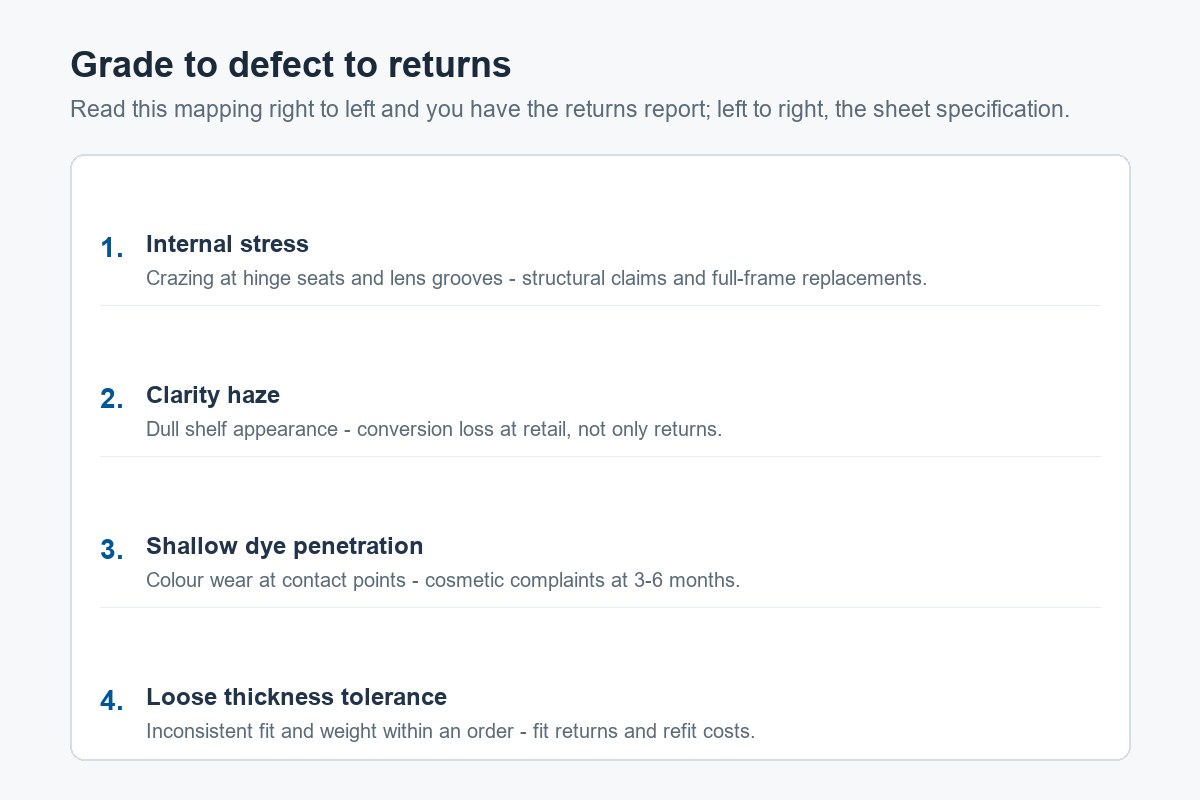
| Internal stress | Crazing at hinge seats and lens grooves → structural claims, full-frame replacements |
|---|---|
| Clarity haze | Dull shelf appearance → conversion loss at retail, not just returns |
| Shallow dye penetration | Colour wear at contact points → cosmetic complaints at 3–6 months |
| Loose thickness tolerance | Inconsistent fit and weight within an order → fit-related returns and refit costs |
Read the table right to left and you have the returns report most brands dread; left to right, the sheet specification that prevents it. One weak indicator is survivable — two together multiply into the return rate that ends supplier relationships.
How to Check Sheet at Goods-In Inspection
Three of the four indicators need no lab equipment and under an hour on any incoming shipment; internal stress shows up under polarised light with a simple stress-viewing filter — an inexpensive tool that catches the most expensive failure mode of all.
How to Specify Acetate Sheet in a Purchase Order
The specification that prevents the defects above fits in four lines: name the sheet tier, state minimum dye penetration (through-colour, not surface), set the thickness tolerance band, and require tumbling polish for a stated minimum number of days with a retained golden sample held by both parties. For the commercial side — how sheet tier shapes price, MOQ and payment structure — see our price, MOQ and payment terms guide, and for the full material landscape the acetate material guide covers grades in depth.
READSUN quotes acetate programs against first-tier cast sheet with documented batch traceability, through-colour dyeing and multi-day tumbling as standard. Request a quotation built on that specification via the inquiry form, or compare it against your current supplier's quote.