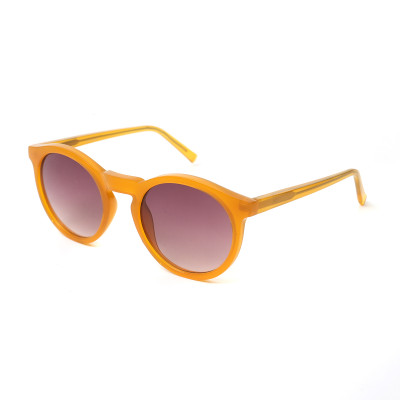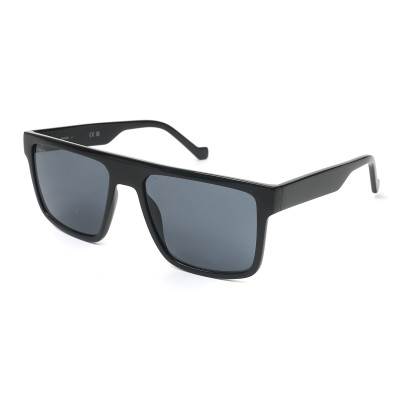
 Aviator
 Cat-eye
 Square
 Oval
Oval Rectangular
 Round
RoundAcetate Optical Frames: A Complete Material Guide for Eyewear Brands
Acetate Optical Frames: A Complete Material Guide for Eyewear Brands
Cellulose acetate is the defining material of premium eyewear. It is the material behind the world's most recognizable designer frames, the foundation of the independent optical boutique market, and a growing category across the global supply chain. According to QYResearch, the global acetate eyewear frames market was valued at approximately US$3.56 billion in 2025 and is projected to reach US$5.05 billion by 2032, growing at a CAGR of 5.2%. For brand owners, sourcing managers, and private label buyers, knowing what acetate actually is — and how to tell premium from average — is a competitive necessity.
Direct answer: Cellulose acetate is a plant-based plastic made from cotton fibers and wood pulp combined with acetic anhydride. It can be polished to a high gloss, holds color with exceptional depth, feels warm and comfortable against the skin, and is adjustable with heat for a precise fit. It is the preferred material for designer, fashion, and premium eyewear — and it is fundamentally different from injection-molded plastic.
What Is Acetate Optical Eyeglasses Frames Factory Grade Material
Not all acetate is created equal. The raw material arrives at the factory as rectangular blocks or sheets, typically around 150 × 150 × 8 mm, in the color pattern that has been ordered. The pattern is not painted on — it is laminated into the block itself, with up to 20 sheets of differently tinted acetate bonded together under heat and pressure. Slice the block at any angle and the pattern continues through. This is why a quality acetate frame keeps its color even after years of wear and re-polishing.
The grade of the acetate sheet determines the ceiling of the finished frame. An acetate optical eyeglasses frames factory working with premium sheet material can achieve richer color depth, better clarity, and superior shape retention than a factory using entry-level acetate. The same principle applies across every category — from men's optical frames to women's fashion frames to sunglasses.
HD Acetate Men Optical Frame Factory Specifications
HD (High Definition) acetate represents a step up from standard acetate. It is produced with higher density and a finer internal structure, delivering four measurable advantages:
- Deeper, brighter color — HD acetate shows more color depth and clarity than standard grades, especially in transparent and translucent colorways.
- Better gloss and polish — the surface accepts a higher shine without cloudiness or dull spots.
- Higher strength and shape stability — frames hold their shape longer and resist deformation from daily wear and heat exposure.
- Characteristic comfort — the material adapts well to the face and feels pleasant against the skin.
For a hd acetate men optical frame factory, these properties translate directly into a better product. Men's frames typically use thicker profiles and darker colorways where surface finish and structural integrity matter most. HD acetate delivers on both — and it is the reason premium men's acetate frames feel noticeably different from budget alternatives on the shelf.
Handmade Acetate Eyeglass Frames Factory: Why Handcraft Matters
The phrase “handmade acetate” is widely used and widely misused. But the production process itself is genuinely labor-intensive. A single pair of acetate frames can involve over 60 manufacturing steps, and premium ateliers may run more than one hundred steps. The reason is simple: acetate does not behave like injection plastic. It must be cut, tumbled, heated, bent, and polished with hands and bench skills at every stage.
Here is what actually happens inside a handmade acetate eyeglass frames factory:
| Step | Process | Time |
|---|---|---|
| 1. Block preparation | Acetate blocks are cut from laminated sheets in the ordered color pattern. | — |
| 2. CNC cutting | The block is mounted in a multi-axis CNC mill and cut to the CAD file for the frame shape. | 20–40 min per frame |
| 3. Tumbling | Frames rotate in drums filled with crushed walnut shells and wax for edge rounding and matte polish. | 5–7 days |
| 4. Hinging | Hinges are heated and hand-set into the temple end; the acetate cools around the hinge core. | 30–45 min per frame |
| 5. Temple bending | Temples are heated and bent on wooden forms; pantoscopic tilt is set by hand. | — |
| 6. Hand polishing & QC | Final buffing, inspection, and adjustment before packing. | — |
The tumbling step is where the difference becomes immediately tangible. A proper Cadore-style atelier tumbles frames for five to seven days. A cheap factory tumbles for 12–24 hours and ships. The difference shows up in the hand: the properly tumbled frame feels smooth on the temple edges; the rushed frame feels sharp and looks slightly dull. For buyers, this is a concrete quality checkpoint. Ask your handmade acetate eyeglass frames factory how long they tumble. If the answer is measured in hours, not days, you are looking at a different class of product.
China Clear Acetate Optical Frames Factory Transparency Grades
Clear and transparent acetate is one of the highest-risk categories in eyewear manufacturing. The material exposes every internal flaw — bubbles, flow lines, uneven color, and polish residue that would be invisible in a solid black frame. This is why only a factory with disciplined process control can reliably produce clear acetate at scale.
A capable china clear acetate optical frames factory controls transparency through material selection and process discipline. The key checks for clear acetate frames include:
- Internal clarity — no visible bubbles, streaks, or cloudiness when held to light.
- Edge polish — the cut edges must be polished to the same clarity as the front surface.
- Color consistency — transparent frames show color deviation between front and temples more readily than opaque frames.
- Hinge integration — metal hinges and cores must sit cleanly without visible adhesive or misalignment.
Transparent acetate is also a growing trend category. The Opti 2025 trade show trend report identified layered gradients, multi-layer colors, and crystal acetates as key directions for 2026, particularly in transparent and crystal tones that modernize retro designs. For brands targeting fashion-forward buyers, clear acetate is not a niche — it is a core offering.
Retro and Modern Acetate: China Optical Modern Eyewear Acetate Frames
Beyond basic transparency, acetate supports a remarkable range of decorative effects that injection-molded plastics cannot match. A china optical modern eyewear acetate frames factory can produce tortoiseshell and horn textures, marble effects, layered gradients, two-tone and striped patterns, and exposed core wires visible through transparent temples.
The 2026 trend outlook from industry analysts points toward retro-inspired tortoises, marble and horn textures, and layered gradients in neutral, tonal, or vibrant palettes. For brands planning their 2026 collections, these are the surface effects that drive boutique and designer demand. The ability to execute them consistently — batch after batch, color after color — is what separates a modern acetate factory from a basic one.
China Retro Optical Acetate Eyeglasses Frame Factory Techniques
Retro-inspired acetate frames rely on specific production techniques that a china retro optical acetate eyeglasses frame factory must master:
- Thicker profiles — retro frames typically use 6–8 mm acetate blocks rather than thinner sheets.
- Beveled edges — chamfered or stepped edge profiles that catch light and add visual weight.
- Hand-polished facets — flat polished planes that create sharp reflections.
- Warm color palettes — amber, tortoise, olive, and brown tones that evoke vintage eyewear.
These techniques require bench skills that cannot be fully automated. The result is a frame that feels sculptural in the hand and reads as premium on the shelf — the defining characteristics of the retro acetate category that continues to drive boutique and designer sales.
Acetate Frame Sunglasses Factory: Same Material, New Shapes
Acetate is not limited to optical frames. The same material advantages — color depth, polish, comfort, and adjustability — apply directly to sunglasses. An acetate frame sunglasses factory uses the same production line and the same quality checkpoints, with one critical addition: lens integration.
For sunglasses, the key considerations are:
- Lens fitting tolerance — acetate frames must hold lenses without stress cracks or gaps.
- Polarized lens compatibility — premium acetate sunglasses often pair with polarized or UV400 lenses.
- Thicker frame profiles — sunglasses frequently use bolder shapes than optical frames, requiring larger acetate blocks.
- Temple and hinge reinforcement — sunglasses are worn in more demanding conditions and need robust hardware.
A capable acetate frame sunglasses factory handles optical and sunglass production on the same quality system, which means consistent material sourcing, consistent polishing standards, and consistent color matching across both categories. For brands building a coordinated optical and sun collection, this is a significant advantage.
It is also worth comparing material choices before committing to a collection. The table below gives a practical reference for B2B buyers.
| Property | Acetate | TR90 | Metal (Stainless/Monel) |
|---|---|---|---|
| Weight (typical) | 25–40 g | 12–20 g | 20–35 g |
| Color depth | Excellent — layered, rich, deep | Moderate — solid colors only | Limited — plating-dependent |
| Adjustability | Excellent with heat (softens at 80–90°C) | Limited — memory flex returns to shape | Good — manual adjustment |
| Durability | High — resists deformation and cracking | Very high — impact-resistant, flexible | High — but plating can wear |
| Premium feel | High — warm, substantial, polished | Moderate — lightweight, sporty | High — depending on finish |
| Best for | Designer, fashion, premium collections | Sports, kids, budget-friendly lines | Classic, business, minimalist styles |
| Typical MOQ | 300–600 pcs/color | 300–600 pcs/color | 300–600 pcs/color |
Acetate adjusts precisely during fitting, which means better initial comfort out of the frame. TR90 is largely maintenance-free but does not hold a precise adjustment the way acetate does, because the flexibility that protects it also lets it move. Metal offers a classic look but requires careful plating control to prevent nickel release and color wear.
Frequently Asked Questions About Acetate Materials
Does acetate deform over time?
High-quality acetate resists deformation well, especially HD grades with higher density. However, all acetate can soften if exposed to excessive heat — for example, leaving frames on a car dashboard in summer. Proper storage and normal wear conditions will not cause deformation. The material softens at 80–90°C, which is why opticians can adjust it with heat.
How should acetate frames be maintained?
Acetate frames should be cleaned with lukewarm water and a mild soap, then dried with a soft cloth. Avoid alcohol-based cleaners, which can dull the surface. Store frames in a case when not in use. For professional adjustment, any optician can reheat and reshape acetate frames without damaging the material.
Why is HD acetate more expensive?
HD acetate uses higher-density raw material with a finer internal structure. It delivers better color depth, clarity, and shape stability than standard acetate. The raw material cost is higher, and the polishing process requires more care to achieve the full gloss potential. For brands targeting premium segments, the cost difference is justified by the visible quality difference.
Can I get custom colors in acetate?
Yes. Acetate is one of the most color-flexible materials in eyewear. Factories can match Pantone references, produce custom layered patterns, and create transparent or translucent effects. Most factories maintain standard color cards with dozens of options. For custom color development, expect a minimum order quantity and a lead time of 15–25 days for color matching and sample approval.
Source Acetate Frames from READSUN
READSUN Optical is a full-category OEM & ODM eyewear manufacturer based in China, with dedicated acetate production lines covering HD acetate, standard acetate, clear transparent grades, and retro-inspired designs. We support brand buyers with hd acetate men optical frame factory programs, china clear acetate optical frames factory capabilities, and acetate frame sunglasses factory production under one roof.
Explore our custom optical frame capabilities, review our manufacturing excellence, and see our OEM/ODM services. We also produce anti-blue light optical frames using the same premium acetate materials.
Ready to source acetate frames factory-direct? Request our acetate color card and sample kit from READSUN today.