 Aviator
 Cat-eye
 Square
 Oval
 Rectangular
 Round
From Wood Pulp to Eyewear: How Cellulose Acetate Sheet Becomes a Frame
Ask a buyer what an acetate frame is made of and the usual answer is "plastic" — which undersells one of the most interesting materials in eyewear. Cellulose acetate starts as cotton linters and wood pulp and emerges as block after weeks of casting and dyeing, long before it reaches a frame factory. Knowing that pipeline is the fastest way to judge why two frames that look identical in a catalogue behave completely differently after three months on a nose.
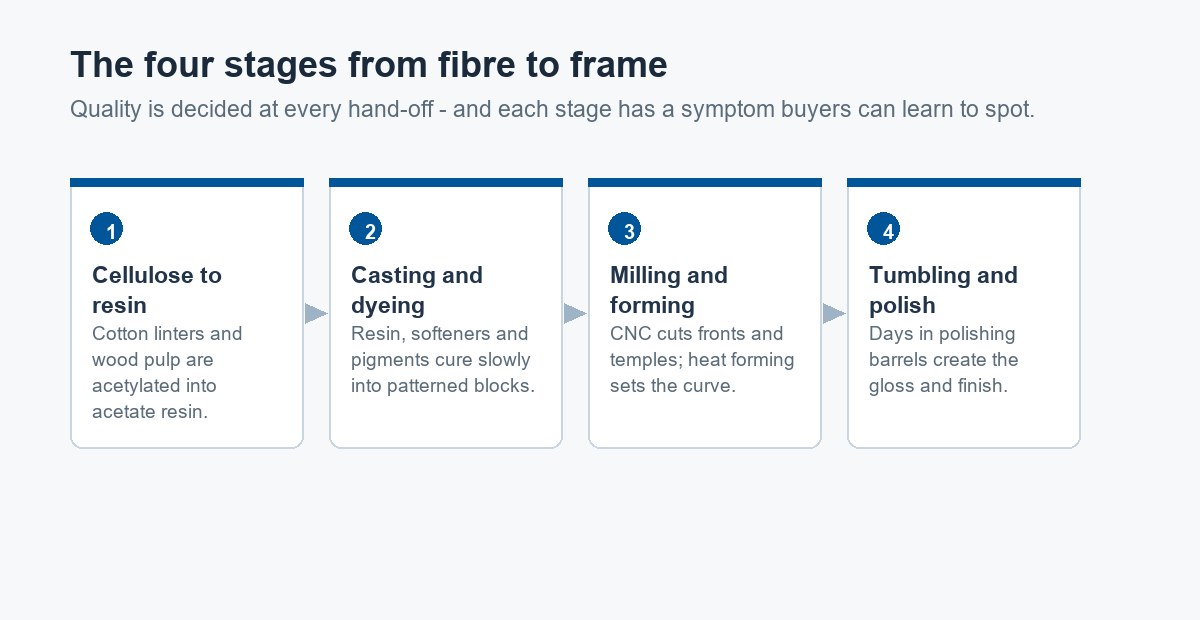
How Acetate Frames Are Made: Four Stages
Stage 1: From Cotton and Wood Pulp to Acetate Resin
Acetate begins with cellulose — cotton linters blended with high-grade wood pulp — acetylated into a stable, plant-derived acetate flake. Two properties make it unique among frame plastics: it is plant-derived rather than petroleum-derived, the root of its sustainability story; and it holds dye in depth, so a tortoise worn down by years of polishing still shows its pattern at the scratch. Injection styrene cannot make that claim.
Stage 2: Casting and Dyeing the Sheet
Resin, softeners and pigments are cast into blocks and cured slowly — a deep-coloured tortoise block can take weeks before its internal stresses relax enough to machine cleanly. The patterns buyers recognise are engineered here, by layering differently pigmented batches: slab-cut sheet shows large, flowing patterns; extruded sheet shows finer, repetitive ones. That difference is visible in every frame cut from it — one of the quiet markers separating premium programs from commodity ones.
Stage 3: Milling and Forming
At the factory the block is sliced to working thickness and fronts and temples are CNC-milled, with production teams orienting each blank so the pattern flows across the bridge and around the lens rims. Forming then bends fronts to their final base curve — and overheating here drives softeners out of the material, leaving frames brittle months later. That is why buyers should ask how a supplier controls forming temperature, not only how they inspect the outcome.
Stage 4: Tumbling, Polishing and Assembly
The gloss buyers associate with premium acetate comes from days in tumbling barrels with progressively gentler media, followed by hand polishing on the areas tumbling cannot reach — the stage our handmade acetate craftsmanship guide examines in detail. Multiday tumbling occupies floor space, so it is a common corner to cut; the shortcut shows up as haze, micro-scratches and a finish that greys within months. Assembly joins fronts to hinges and temples, and good factories compare every bulk carton against the retained golden sample.
Where Acetate Frame Quality Is Won or Lost
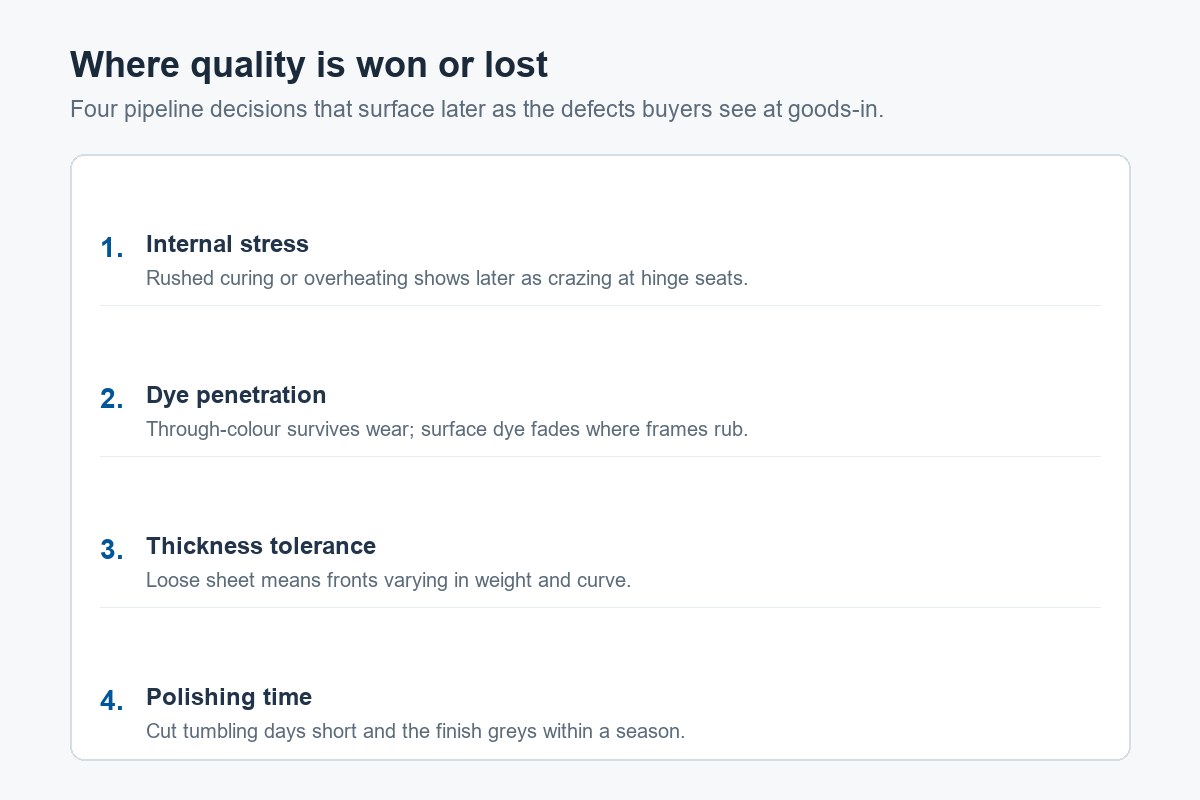
- Internal stress from rushed curing or overheated forming shows up later as crazing around hinge seats and lens grooves.
- Dye penetration decides whether colour survives daily wear — surface-dyed material fades where it rubs, at nose pads and temple tips.
- Thickness tolerance drives milling consistency; out-of-tolerance sheet produces fronts that vary in weight and curve within one order.
- Polishing time is the difference between a finish that stays glossy for years and one that greys over a season.
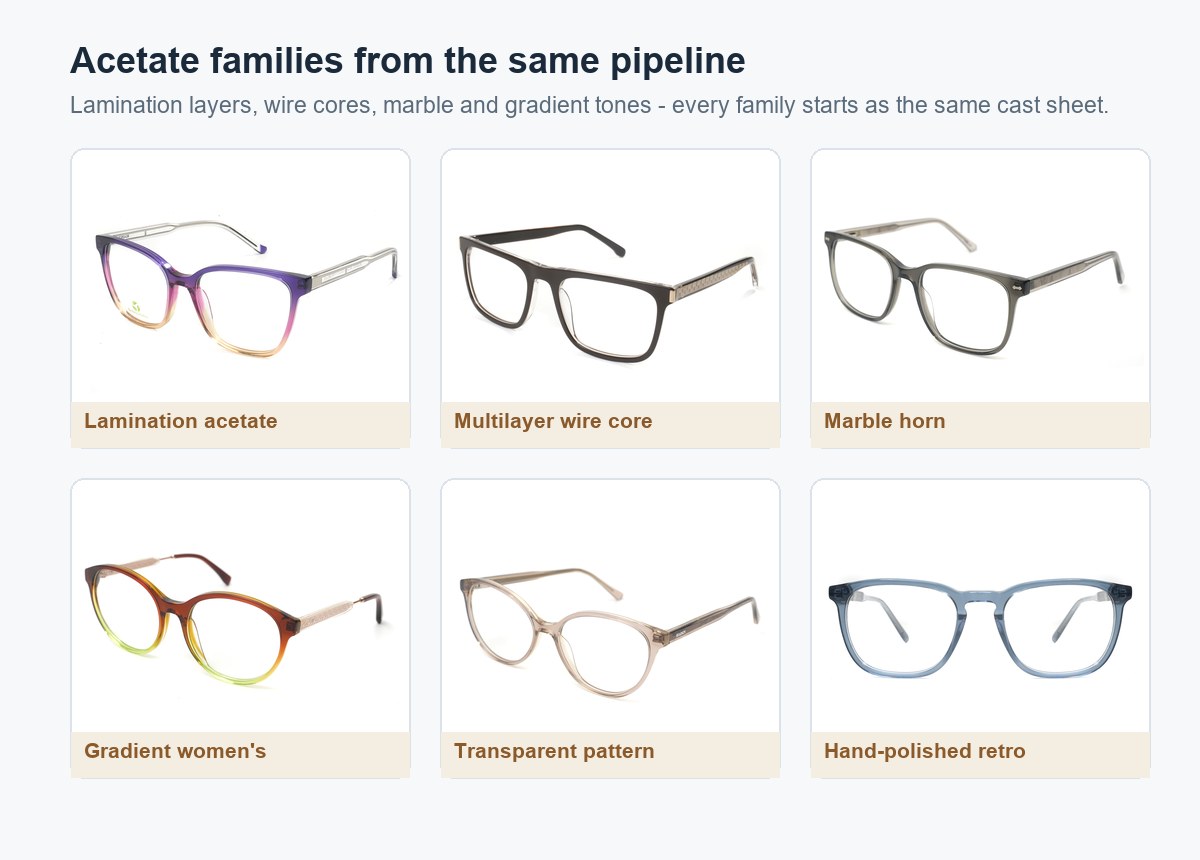
Bio-Acetate: Same Pipeline, Different Claim
Bio-acetate raises the bio-based carbon share, often using FSC-certified wood pulp or recycled cotton feedstock, with some grades adding biodegradability claims. The production route is identical to conventional acetate — which is why a factory already running first-tier conventional sheet can usually qualify a bio grade without reinventing its process. Our bio-acetate vs cellulose acetate guide compares the two for EU-bound programs.
What to Specify When Sourcing Acetate Frames
The pipeline gives buyers a concrete specification vocabulary. Ask suppliers to name the sheet tier they quote against; request minimum dye penetration and tumbling days in writing; keep a retained golden sample so bulk shipments are compared against the material you signed off. For the commercial side — how sheet choice shapes price, MOQ and payment terms — our wholesale price and payment terms guide picks up where this article ends.
READSUN Optical runs acetate optical, clip-on and kids programs from Wenzhou on first-tier sheet, with the pipeline above running in-house from milling through final inspection. Review the range on our product list or start a programme via the inquiry form.