 Aviator
 Cat-eye
 Square
 Oval
 Rectangular
 Round
Handmade Acetate Eyeglass Frames: Why Craftsmanship Wins for Premium Brands
Eyewear Materials and Manufacturing Technology
Premium brands rarely compete on lens specifications. The frame itself carries the price tag, and on acetate frames the gap between a mid-market product and a premium one is almost always the amount of handwork inside it.
The Short Answer
Handmade acetate eyeglass frames win for premium brands because hand cutting, multi-stage polishing and individually shaped temples produce a depth of finish that a production line cannot copy at the same price point.
- Handwork shows up where customers actually look: edges, curves and the temple.
- Skilled finishing keeps colours deeper and outlines crisper than a fast machine cycle.
- Craft adds cost, so it belongs on the line that justifies a higher retail price.
What Handmade Really Means on an Acetate Frame
No acetate frame is made entirely by hand, and buyers should not expect one to be. The term describes where hand skill enters a mostly machined process, and on a handmade acetate optical frame it concentrates in four places: sheet selection, front cutting, edge polishing and temple shaping.
Where hands enter the process
An experienced worker chooses each sheet for colour match and density before anything is cut. After the fronts are machined, edges are ground, tumbled and finished by hand until the surface reads as one continuous block of material. Temples are then heated and bent one by one so the curve sits behind the ear instead of pressing on it.

What does hand made acetate on eyeglass frame mean for buyers
In practice it is a promise about finishing time. A handmade frame has spent longer on the bench than a machine-finished one, and that time shows up as smoother bevels, more even colour through the thickness, and temples that hold their adjusted shape. Ask a supplier exactly which steps are manual, and the real answer separates a workshop from a marketing line.
Handmade Acetate Optical Frames vs Machine-Finished Frames
Neither route is wrong. They serve different price bands and different volumes, which is why the comparison below focuses on where each one wins.
| Aspect | Handmade acetate frames | Machine-finished frames |
|---|---|---|
| Edge finish | Multi-stage polish, deep glass-like surface | Uniform but flatter, less depth |
| Colour and pattern | Matched sheet by sheet across a batch | Consistent within a run, less nuance |
| Temple comfort | Bent and set individually | Standard curve from the tool |
| Unit cost and lead time | Higher, longer | Lower, faster, easier to repeat |
| Best fit | Premium, fashion and boutique lines | Entry price and volume programmes |
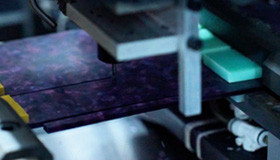
The practical test is simple. Hold both versions under retail lighting and turn them slowly. On a handmade frame the pattern continues through the bevel and the edges keep their lustre from every angle. On a quick machine cycle the polish sits flatter and the bevel breaks the pattern.
Artisan Acetate Eyewear Manufacturing: Skills Behind the Finish
The skills that matter most are invisible in a product photo. Tumbling time, abrasive sequence and the judgement of when to stop buffing all decide whether an acetate surface looks deep or merely shiny. Rushed polishing burns edges, and burnt edges cannot be recovered without re-cutting.
Temple shaping is the other quiet differentiator. A heated acetate temple can be curved to match a market preference, and on handmade acetate sunglass frames that shaping often carries the whole fit story, because sunglasses are worn longer in summer heat where a poor curve shows immediately.
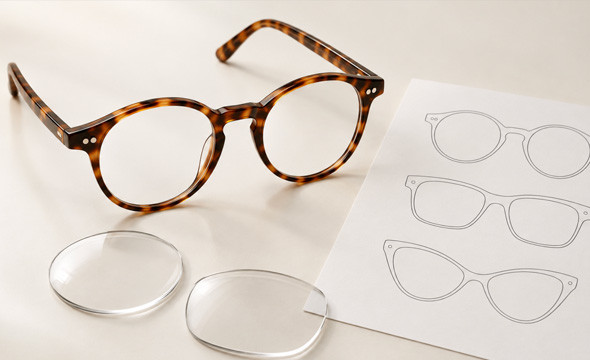
Sourcing Handmade Acetate Eyewear Without Losing Scale
Premium hero styles
Give the handwork budget to the styles that define the line. Two or three hero frames carry the craft story for the whole collection.
Hybrid production
Machine the fronts, hand-finish the edges and temples. Most of the visible premium survives at a workable cost.
Consistency control
Approve a range of polished samples, not one piece, so batch-to-batch variation stays inside what a boutique customer accepts.
Our acetate eyeglass frames line includes both handmade and hybrid builds, the manufacturing process page shows where handwork sits in the line, and the about us page introduces the finishing team behind it. Brands planning a private programme can start from the OEM/ODM service, and the design studio helps translate a craft direction into a sellable silhouette.
Common questions
Does handmade acetate mean lower quality control?
No. It means more manual steps, so consistency depends on skill management. A capable workshop controls it with sample ranges, in-process checks and clear acceptance criteria for polish and colour.
Is handmade acetate worth the higher unit cost?
Only where the retail price supports it. On premium and boutique lines the finish difference is what customers pay for. On entry-price programmes, machine finishing is the rational choice.
How long does a handmade acetate order take?
Expect longer sampling and production lead times than a standard run, mainly from the tumbling and hand-polishing stages. Agree the schedule per batch, because craft capacity sets the pace.
Handmade acetate is not a process upgrade, it is a positioning choice. Give it to the frames that carry your brand name, and let volume styles stay efficient.