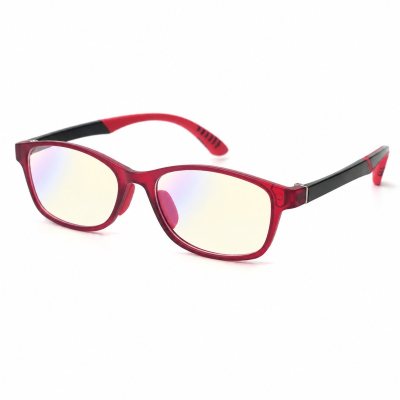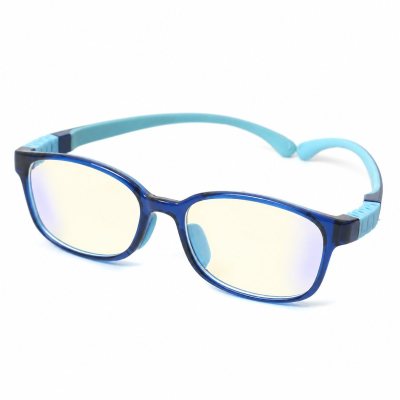
 Aviator
 Cat-eye
 Square
 Oval
 Rectangular
 Round
US Tariffs on Chinese-Made Eyewear in 2026: A Landed-Cost Briefing for American Buyers
If you buy optical frames or finished eyewear from China, 2026 has been a year of moving targets. Emergency tariffs were struck down in February, a temporary surcharge came and went over the summer, and a new Section 301 action took effect in July. The rules that govern what you actually pay at the border are now reasonably stable — but the way they stack together is not obvious, and we still see buyers mis-costing orders because they assume last year's numbers still apply.
This briefing explains the current duty structure on Chinese-made eyewear, walks through a worked landed-cost example, and lists the documents READSUN Optical provides so your customs broker can clear shipments without surprises. It is written for American importers, distributors and optical retail chains planning Q1 2027 purchases.
What the Duty Stack Looks Like Now
There is no single "eyewear tariff". What you pay is a stack of separate duties applied on top of each other. For finished spectacles and similar eyewear imported from China (classified under HTS 9004.90), the stack as of late November 2026 looks like this:
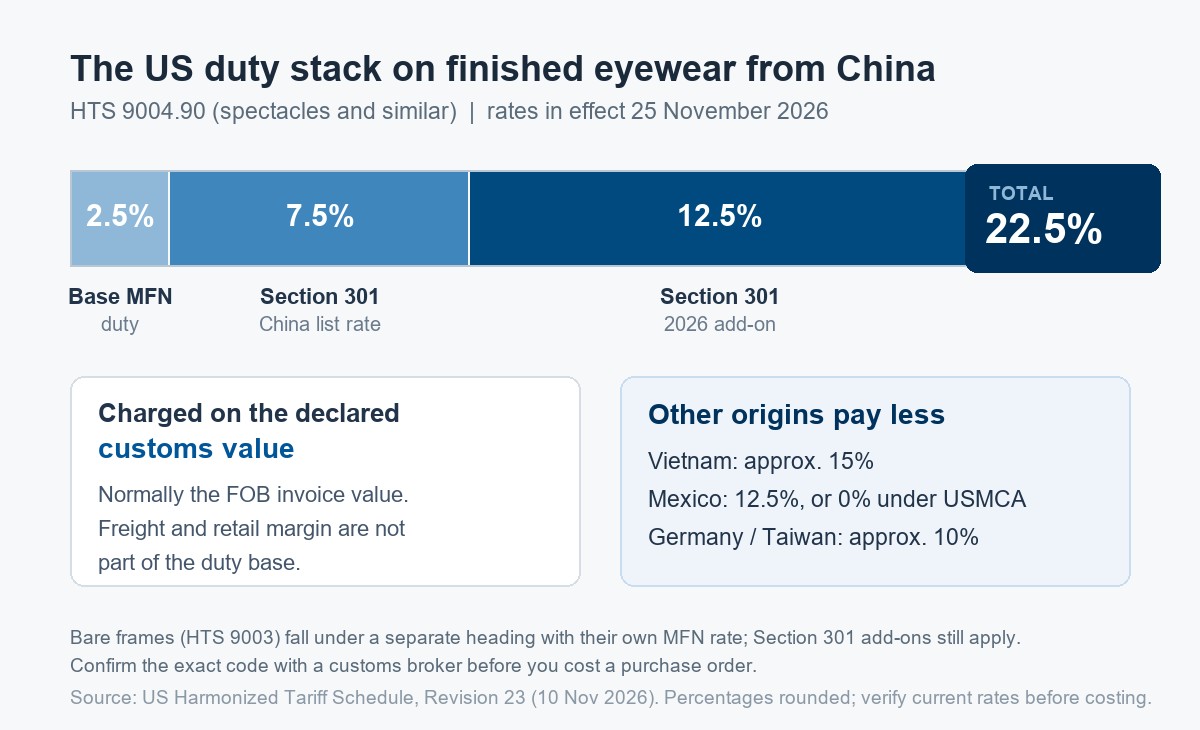
Three points matter for your costing. First, all of these percentages are charged on the declared customs value of the goods — normally the FOB invoice value — not on freight or your retail price. Second, bare frames and mountings sit in a different heading (HTS 9003) with their own MFN rate, and the Section 301 add-ons still apply on top of it, so confirm the exact code with your broker before you cost a purchase order. Third, the same product from other origins carries a lower total: the figures in the chart above are indicative only, but the gap between China and alternative sourcing countries is real and should be part of your supply-base conversations this planning season.
How 2026 Changed the Picture
The rates above are the endpoint of an unusually active year. Four events shaped them:
- February 2026. The emergency (IEEPA-based) tariffs imposed on Chinese goods in 2025 ended after a US Supreme Court ruling found that the IEEPA does not authorise tariffs. For a few weeks, landed-cost models that everyone had built simply stopped being valid.
- February–July 2026. A temporary 10% surcharge under Section 122 applied from late February and expired on 23 July.
- July 2026. A new Section 301 action took effect on 24 July, adding a further 12.5% duty on most Chinese-origin products — including eyewear. This is the largest single component of today's stack.
- November 2026. The remaining 178 product exclusions from earlier tariff actions expired on 9 November. If your costing relied on an exclusion claimed in 2025 or early 2026, it almost certainly no longer applies.
One more change that catches buyers off guard: the US$800 de minimis exemption ended for all countries in August 2025. Sample shipments and small courier parcels that used to clear duty-free now require a customs entry and pay whatever duties apply — worth remembering when you request pre-production samples, because a “free” sample batch can still carry a duty and brokerage bill on arrival.
A Worked Landed-Cost Example
The easiest way to see the stack at work is a simple order. Say you import 1,000 pairs of finished reading glasses from China on FOB terms, at US$6.50 per pair. The table below shows illustrative landed-cost components — freight in particular varies widely by season and lane, so treat this as a framework rather than a quote.
| Goods (customs value) | 1,000 pairs × US$6.50 FOB = US$6,500.00 |
|---|---|
| Duty (22.5% of customs value) | US$1,462.50 |
| Merchandise processing fee (MPF) | approx. US$33 (0.3464% of value; formal entries have minimum and maximum amounts) |
| Harbor maintenance fee (HMF, ocean) | approx. US$4 (0.0644% of value) |
| Ocean freight (illustrative) | US$900.00 |
| Estimated landed total | approx. US$8,900 — about US$8.90 per pair |
That works out to roughly 37% above the FOB unit price before it reaches your warehouse. When your supplier quote says “US$6.50”, the number you use in your margin model should be closer to US$9. If you cost at the invoice price and discover the duty line at entry, the shortfall has to come out of somewhere — usually your launch budget. This is also why the pricing and payment structure of a programme matters as much as the unit price; we covered that side in detail in our wholesale acetate glasses guide to price, MOQ and payment terms.
Country of Origin: Rerouting Does Not Reset the Duty
A recurring misunderstanding: US duties follow the country of origin of the goods — where they are manufactured — not the country they ship from. Routing Chinese-made frames through Vietnam, Malaysia or anywhere else does not, by itself, change their origin or their duty treatment. US Customs determines origin from where and how the goods were produced, and misdeclaring origin carries penalty exposure far larger than the duty saved.
The legitimate version of this conversation is diversification: if part of your range is genuinely manufactured in another country, it is genuinely assessed at that country's rates. For buyers running mixed-origin programmes, the useful exercise is to map every SKU to its true origin and HTS code, then model landed cost per lane — not per supplier. Your broker can confirm classifications; we can supply the production documentation that supports the origin you declare.
Who Pays: Incoterms and the Importer of Record
Duties are paid by the importer of record. Under EXW or FOB terms, that is you: you or your broker file the entry, and the duty, MPF and any brokerage fees land on your side of the ledger. Under DDP terms, the seller arranges delivery with duties paid and prices them into the quote — convenient, but remember that the money does not disappear; it is simply moved into the unit price, usually with a handling margin on top.
READSUN quotes EXW, FOB and DDP depending on order size and buyer preference, and for US clients we typically work on a 30/70 payment schedule (30% deposit, 70% against shipping documents) with trade assurance available. Whichever term you choose, we issue a commercial invoice with a correct, supportable declared value — because that value is the base your duty is calculated on, and the anchor for everything your broker files.
Four Legitimate Ways to Keep Landed Costs Down
None of these involve grey areas; they are the standard tools customs professionals use every day.
- Get the classification right. Bare frames, finished eyewear, clip-on sunglasses sold as separate accessories and readers can land in different headings with different rates. A wrong code is the most common cause of overpaying — and of penalties when it goes the other way.
- Declare value accurately. Under-invoicing to shrink the duty base is the fastest route to seized shipments and fines, and reputable factories will not do it. The durable saving comes from structuring the programme — see the costing guides in Related Reading below.
- Consolidate shipments. Entry fees such as MPF are charged per entry, so combining orders into fewer, fuller containers reduces the fee component per unit. It also improves freight rates in most lanes.
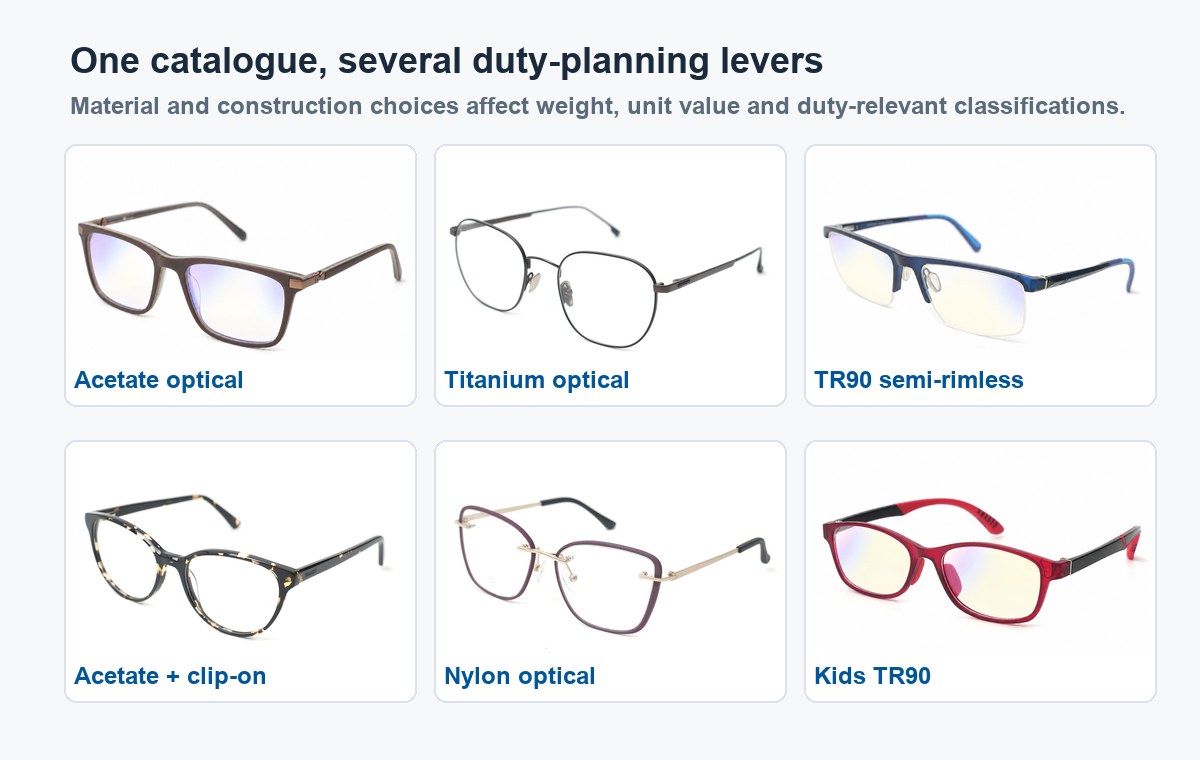
- Model duty into product selection. Weight, construction and packaging all affect the freight share of landed cost; our material cost and performance matrix is a good starting point for comparing options on more than unit price.
What READSUN Provides US Buyers
For every US-bound order we prepare the standard document set: a commercial invoice showing the true transaction value, a detailed packing list, a certificate of origin, and HTS classification information on request. If you work with a licensed broker — and for formal entries you will — these are the inputs they need. First-time importers can send specifications through our inquiry form or reach the team via the contact page, and we will walk through the shipping side before the deposit stage so there are no landed-cost surprises at entry.
Duty policy will keep moving; the discipline that protects your margins does not: cost every order on landed value, keep origin documentation complete, and re-verify rates each quarter. We will keep this briefing updated as the 2027 rate picture develops.
Notes and Disclaimer
Rates in this article reflect the US Harmonized Tariff Schedule as of 25 November 2026 and are rounded. Trade measures change frequently; always verify current rates and classifications with a licensed customs broker before finalising a purchase order. This article is general information, not legal or customs advice.