
Designed to Reflect You
Global Eyewear Brands’ First Choice in Manufacturing
 Aviator
 Cat-eye
 Square
 Oval
 Rectangular
 Round
Home / All / Quality Assurance & Risk Control / How do you test UV400 protection in sunglasses lenses?
How do you test UV400 protection in sunglasses lenses?
We verify UV400 with a spectrophotometer that scans transmittance from 280 to 400 nm: a lens passes when it blocks 99%+ of that band, with UVB transmittance at or below 1% and UVA at or below 5%. Every READSUN production batch is tested and reports are shared on request.
Test Standards We Test Against
| Standard | Market | Key UV limits |
|---|---|---|
| EN ISO 12312-1 | EU (mandatory) | UVB transmittance ≤1%; UVA ≤5%; category 0-4 by visible transmittance |
| ANSI Z80.3 | US (voluntary) | UV transmittance limits plus optical and prismatic tolerances |
| UV400 claim | Global label | Cut-off at 400 nm; effectively blocks 99-100% of UVA and UVB |
How a Batch Test Runs
- Sampling: lenses are pulled at random from the production batch, not from the golden sample.
- Calibration: the spectrophotometer is zeroed against a reference before scanning.
- Scan: each lens is scanned across 280-400 nm to capture UVA and UVB transmittance curves.
- Judgment: results are compared against the declared standard's limits; any failure quarantines the batch for root-cause review.
- Reporting: a batch test report with transmittance data is issued and can be attached to your shipment documents.
Coatings matter too: UV blocking comes from lens material absorption or UV coating. If your spec includes mirror or AR layers, re-test after coating — see what surface treatments do in the lens coatings guide.
Need UV400 test data with your order? Request batch transmittance reports from READSUN.
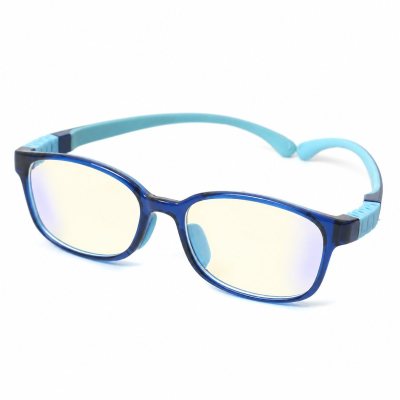
Are you looking for a reliable manufacturer of Optical Frames products?
We can quickly provide customers with market analysis, technical support and customized services.Products
Ability
