 Aviator
 Cat-eye
 Square
 Oval
Oval Rectangular
 Round
RoundHow do I check the quality of eyeglass frames?
To check the quality of eyeglass frames, inspect six points: hinge action, weld joints, surface finish, frame alignment, screw tightness, and material feel. A quality frame opens smoothly, sits flat, has clean edges, and shows no gaps or rough spots. For B2B buyers, a written inspection checklist plus AQL sampling reduces returns and protects brand reputation. READSUN Optical applies this checklist at every eyeglass frame quality control stage.

Eyeglass Frame Quality: What It Means for Eyewear Importers
Eyeglass frame quality is not a single feature. It is the result of material grade, tooling precision, assembly skill, and final inspection. A frame can look good in a photo but fail in daily use if the hinge is weak, the plating is thin, or the temple alignment is off.
For importers and brands, quality has three commercial effects:
- Return rate: poor hinge or plating causes customer complaints and returns.
- Brand reputation: one bad batch can damage trust with retailers.
- After-sales cost: warranty claims and replacements reduce profit margin.
A clear inspection checklist prevents these problems. Buyers can use the same checklist at the factory, at a third-party inspection, or on arrival at the warehouse.
Required Standards and Test Methods: Eyeglass Frame Quality
Professional quality checks combine visual inspection with standard testing. Visual checks catch surface issues. Standard tests confirm durability and compliance.
| Check | What to look for | Common standard |
|---|---|---|
| Hinge action | Smooth open and close, no squeak, no loose play | Hinge fatigue test (10,000+ cycles) |
| Weld joints | Clean weld, no dark spots, no cracks | Visual + pull test |
| Surface finish | No scratches, bubbles, or rough edges | Visual under bright light |
| Frame alignment | Frame sits flat on a table, temples level | Symmetry check |
| Screw tightness | Screws flush, no stripping, no looseness | Torque check |
| Electroplating | Even color, no peeling, no pinholes | Salt spray test |
| Nickel release | Below 0.5 µg/cm²/week for EU markets | EN 16128 |
| Material safety | No harmful substances, correct grade | Material declaration |
For metal frames, welding and plating are the two highest-risk areas. For acetate frames, hinge inserts and surface polishing matter most. For TR90 frames, mold finish and hinge assembly matter most.
Eyeglass Frame Quality: Documents and Certificates to Request
Buyers should request documents before shipping. These documents support customs clearance and after-sales claims.
- Material declaration: confirms the frame material and grade.
- Nickel release test report: required for EU and regulated markets.
- Durability test report: hinge fatigue, temple strength, drop test.
- Salt spray test report: confirms corrosion resistance for metal frames.
- AQL inspection report: confirms the defect rate before shipment.
- Declaration of conformity: confirms the product meets market rules.
- ISO 12870 test report: common spectacle frame standard.
- Certificate of origin: supports duty and customs planning.
Buyers should verify that test reports match the actual production batch. Old reports from a different batch are not valid evidence of current quality.
Eyeglass Frame Quality Explained Step by Step
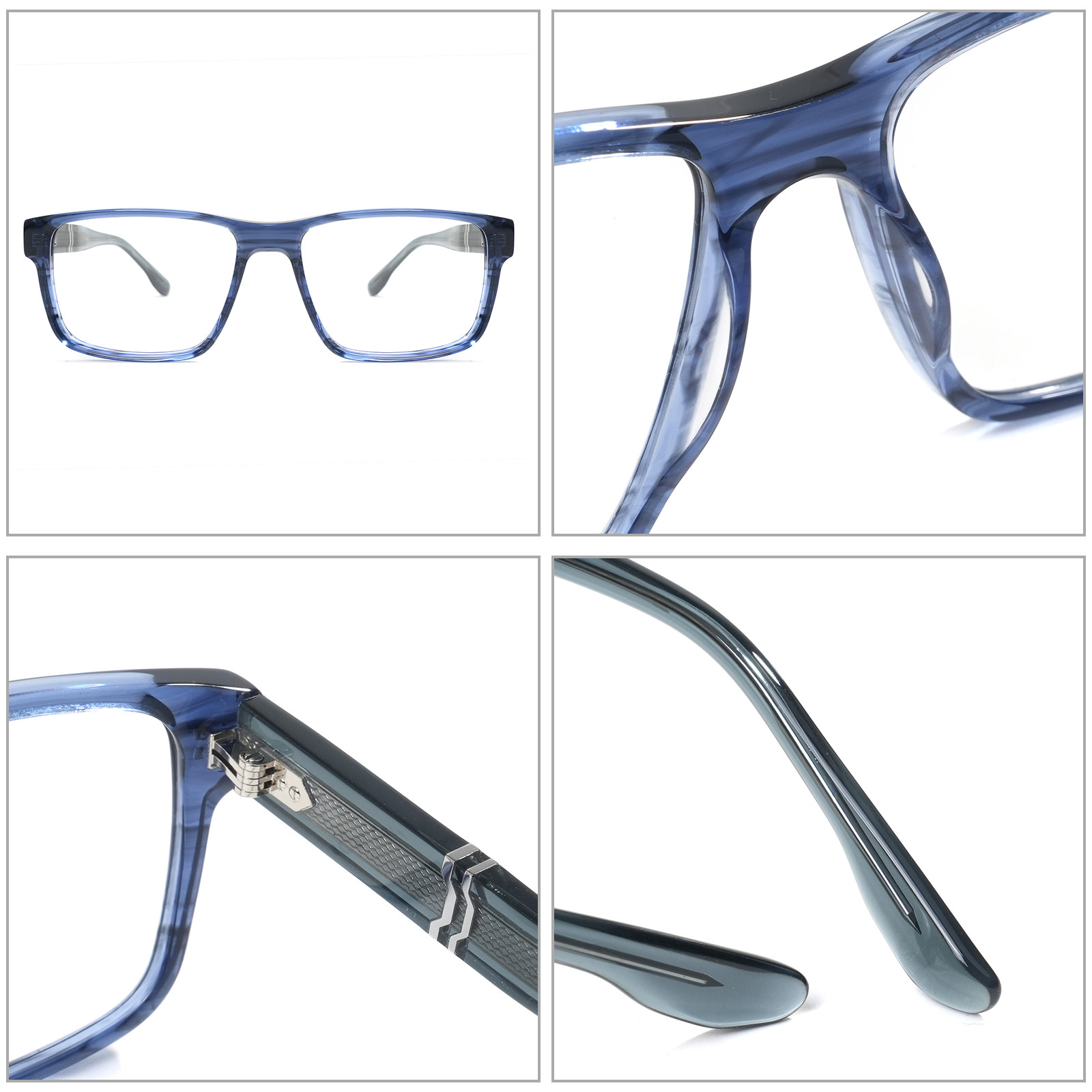
Buyers can run a simple six-step inspection on any sample or shipment. The check takes a few minutes per frame and catches most defects.
- Open and close the hinge. The action should be smooth, not stiff or loose. Listen for squeaks or grinding.
- Inspect the weld joints. Look for cracks, dark spots, or gaps. A good weld is smooth and clean.
- Check the surface finish. Hold the frame under bright light. Look for scratches, bubbles, or uneven color.
- Place the frame on a flat table. All four temple tips should touch the surface evenly. If not, the frame is warped.
- Check the screws. They should sit flush and not strip when tightened. Loose screws are the most common hinge failure point.
- Feel the material. Acetate should feel warm and solid. Metal should feel smooth with no sharp edges. TR90 should feel light and flexible.
For bulk shipments, buyers should sample multiple cartons, not just the top layer. Defects often appear in lower layers or specific production batches.
Eyeglass Frame Quality: Test Reports and Declaration of Conformity
Test reports confirm that the frame meets the specification. Buyers should request reports for the exact batch being shipped. Common test reports include:
- Hinge fatigue test: confirms the hinge can survive thousands of open-close cycles.
- Salt spray test: confirms the plating resists corrosion from sweat and humidity.
- Nickel release test: confirms the frame meets EU REACH limits.
- Drop test: confirms the frame survives normal handling without breaking.
- Temple strength test: confirms the temple does not snap under pressure.
Buyers should match the report date and batch number with the actual shipment. This prevents suppliers from using old test reports for new production.
How READSUN Supports Eyeglass Frame Quality for Global Clients
READSUN Optical is a B2B eyeglass frame manufacturer with a documented quality control system. Every order passes through a multi-stage inspection before shipment.
Our quality process includes:
- Incoming material check: confirms material grade and color match.
- In-process inspection: checks hinge, weld, and finish at each production stage.
- AQL final inspection: samples the finished batch to confirm defect rate.
- Durability testing: hinge fatigue, salt spray, and drop test as required.
- Compliance testing: nickel release and material safety for regulated markets.
- Documentation: material declaration, test reports, and certificates for every shipment.
Buyers can review custom optical frames for product options, or learn more about READSUN Optical.
Need a reliable eyeglass frame quality check for your next order?
Share your target material, structure, quantity, and market requirements. Our team will respond with a full inspection plan and quality documentation.
Contact READSUN Optical to start.
Eyeglass Frame Quality FAQ
How do I check the quality of eyeglass frames?
Check six points: hinge action, weld joints, surface finish, frame alignment, screw tightness, and material feel. For bulk orders, use AQL sampling and request test reports.
What are the most common quality defects in eyeglass frames?
Common defects include loose or broken hinges, poor welds, thin or uneven plating, warped frames, stripped screws, and rough surface finish.
What is AQL inspection for eyewear?
AQL (Acceptable Quality Level) is a sampling standard used to judge a batch of frames. Common levels are 2.5 and 4.0. It defines how many defects are allowed in a sample before the batch is rejected.
What documents should I request for frame quality?
Request material declaration, nickel release test report, durability test report, salt spray test report, AQL inspection report, and certificate of origin.
Can READSUN provide quality inspection reports with my order?
Yes. READSUN provides AQL inspection reports, durability test reports, nickel release test reports, and material declarations for every shipment. Contact us for a sample document package.
Request an eyeglass frame quality quote from READSUN Optical today. Share your target material, structure, quantity, and market needs, and our team will recommend the best solution for your program.