 Aviator
 Cat-eye
 Square
 Oval
 Rectangular
 Round
Luxury Acetate Sunglasses: What Separates Premium Factory Programs from Look-Alikes
Eyewear Market Trends and Brand Insights
Two acetate sunglasses can look identical in a listing photo and sell for 39 dollars and 290 dollars respectively. The gap is not the logo - it is a set of physical decisions made before the first pair is polished. Understanding where luxury acetate sunglasses actually separate from look-alikes is what allows a buyer to commission the former instead of paying for the latter.
The Short Answer
Five things separate a true luxury acetate frame from a look-alike: sheet thickness and transparency depth, hinge feel and hardware grade, temple weighting and balance, edge bevel and chamfer quality, and the smell test - cheap plasticiser is detectable the moment the case opens. Premium programs control all five deliberately; look-alikes mimic the silhouette and skip the rest.
- The silhouette is the cheapest thing to copy - it is also the least predictive of price.
- Premium factory programs differ in polishing stages, hardware grade and assembly precision.
- Luxury lines are built small-batch with repeated sampling, not scaled from one hero shot.

What Defines Luxury Acetate Sunglasses?
Sheet Quality, Thickness and Colour Depth
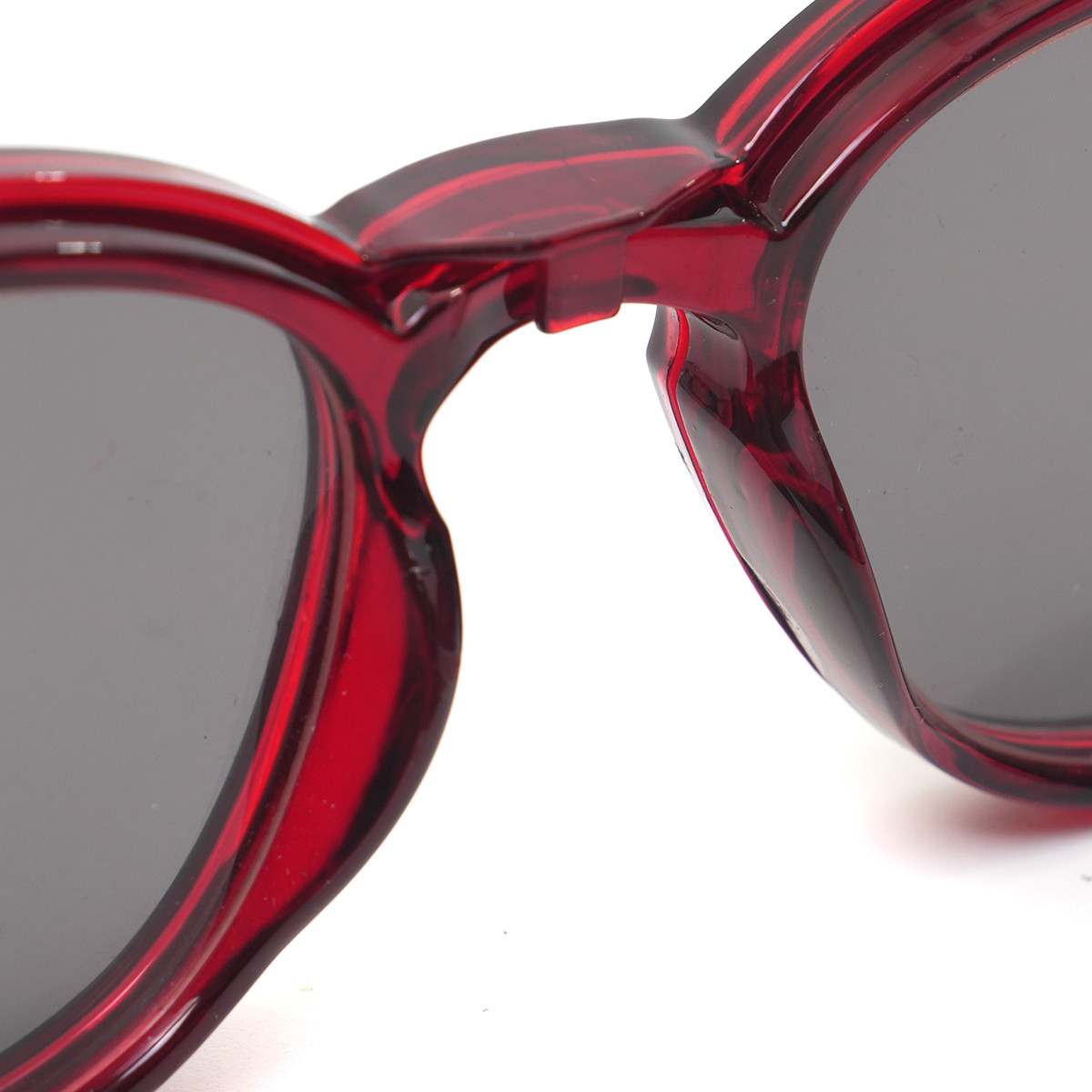
Luxury starts with the sheet, literally. Premium acetate fronts run thicker gauges with high-clarity transparency - hold a crystal-tint front to the light and the colour should have depth, not dye. Cheap programs simulate that depth with surface treatments that wear; real depth lives in the material itself. Layered and translucent sheets cost more per block and reject more easily in production, which is precisely why they signal premium.
Hardware, Hinge Feel and Temple Balance
The second tell arrives when the frame opens: hinge action should be smooth and quietly damped, hardware should feel machined rather than stamped, and the temple should carry deliberate weight toward its balance point so the frame sits rather than perches. Opening a luxury acetate frame is designed to be a small event - and it is one that costs real money in hardware and assembly time, which is why look-alikes consistently fail it.
How Premium Eyewear Houses Source Acetate Frames
Premium houses buy differently from volume buyers. Orders run small-batch and multi-season rather than one large drop; sampling runs in repeated physical rounds - colour, thickness, bevel - before tooling; and hero colourways are negotiated with regional exclusivity so the same frame does not appear on every shelf in the market. The craftsmanship infrastructure that makes this possible - hand-polishing stages, individual temple shaping, batch-level colour control - is documented in the handmade acetate eyeglass frames guide.
Factory-Direct Luxury Acetate Sunglasses: Where the Savings Come From
The uncomfortable arithmetic of luxury eyewear is that the retail multiple sits mostly on layers between the factory and the shelf: brand premiums, distributor margins, licensing stacks. Factory-direct premium programs remove those layers while keeping the physical specification intact - the same sheet grades, the same hinge hardware, the same polishing hours. What changes is who captures the margin: the brand that commissioned the line, instead of a chain of intermediaries. That is the entire proposition behind building a premium acetate line with an OEM factory rather than buying inventory from one.
Five Tests Buyers Use to Judge a Luxury Acetate Frame
- The sheet test. Check thickness at the lens rim and hold translucent areas to light - depth of colour should come from the material, not the surface.
- The hinge test. Open and close slowly ten times - action should stay smooth and damped, never gritty, and return cleanly.
- The balance test. Set the frame down on a flat surface - it should sit even; on the face, it should rest without pressure points.
- The edge test. Run a fingertip along rim and temple edges - a luxury frame is bevelled and chamfered everywhere, with no mould line anywhere.
- The smell test. Open the case - premium acetate carries a faint neutral scent; sharp chemical odor signals low-grade plasticiser.
Private Label Luxury Acetate Sunglasses: Building a Credible Premium Line
A credible private-label premium line is built in three moves: define the silhouette and sheet story first, lock the colourways with exclusivity second, and specify packaging to the same standard third. The order matters - brands that start from packaging produce expensive boxes around ordinary frames, which premium retail buyers detect in seconds. The ownership mechanics behind colourway exclusivity and MOQ tiers are compared in the private label vs white label acetate guide, and the program options sit on the private label frames page.

Common Compromises That Kill the Premium Feel
Six compromises reliably flatten a premium story: blurred or shallow temple engraving, packaging that feels lighter than the frame, hinge action with any detectable play, rim edges that skip the final chamfer, colourways lifted from a best-seller without development, and lens quality beneath the sheet grade - a premium acetate front over a basic lens is the most common and most expensive mismatch of all. Every one of these is a specification decision, not a budget constraint, which is why they belong in the spec sheet rather than in the hope that the factory cares.
Develop a Luxury Acetate Sunglasses Line with READSUN
READSUN develops premium acetate sunglass programs factory-direct: sheet selection and thickness specification at the front end, mono-spring and machined hardware in the middle, multi-round sampling and batch-level colour control through production. Start from the custom sunglasses program to define silhouette and sheet, browse the premium acetate optical frames range for base fronts, and set the seasonal direction against the 2027 acetate eyewear trends report.
Common questions
Can a luxury acetate line be launched in small quantities?
Yes - premium programs are inherently small-batch. The economics work because unit margins carry the development cost; what small volume cannot buy is speed, so plan development lead time honestly.
Can a factory grant exclusivity on a luxury acetate model?
Regional and colourway exclusivity is negotiable within a private-label program, typically tied to the MOQ commitment for that model. It should be written into the agreement before sampling, not negotiated after the frame succeeds.
Can luxury-level packaging be customised?
Fully - case material, printed sleeves, tray inserts and outer boxes are specified alongside the frame. Match the packaging spec to the frame spec: under-packaging undersells the product and over-packaging inflates landed cost without adding perceived value.