 Aviator
 Cat-eye
 Square
 Oval
 Rectangular
 Round
Beta-Titanium Hinges and Kids' Eyewear: Lessons from the 2026 SILMO d'Or Kids Winner
Children's eyewear is the only category where the customer is guaranteed to misuse the product: frames get bent back by hand, slept on and dropped from playground height — then must keep a prescription correctly positioned in front of growing eyes. When ZIGZAG by Karavan Kids took the 2026 SILMO d'Or kids title for a 3–8 frame built on flexible beta-titanium hinges, the jury rewarded exactly the engineering this category needs.
What the Winning Kids' Frame Got Right
ZIGZAG's designers moved the flex out of the rigid front and into the hinge zone: the front keeps its shape — which keeps the prescription where the optician set it — while beta-titanium springs absorb the over-opening and rough folding that destroy barrel hinges on children's frames. Just as smart, the engineering sits inside a frame children want to wear: playful geometry that passes the "I picked it myself" test. A durable frame a child refuses to wear protects nothing.
How Kids' Frames Actually Fail
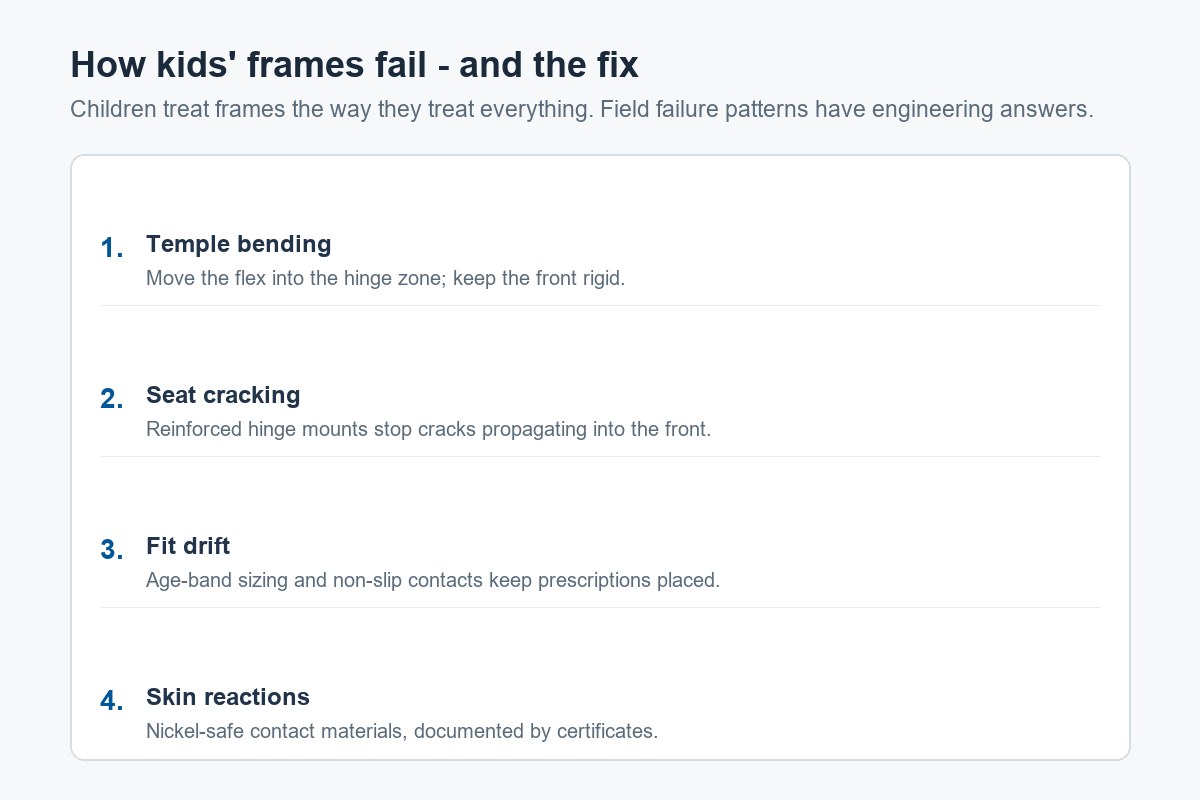
- Temple bending. The most common failure: a temple bent far past its design angle, then forced back. Barrel hinges crack their seats; the fix is flex zone engineering.
- Seat cracking. Hinge seats punched or glued into thin plastic fronts propagate cracks under repeated stress, especially where the front is narrowest.
- Fit drift. Frames slip down small noses, children look over the top of the lenses, and the prescription stops doing its job — a functional failure with no visible breakage.
- Skin reactions. Nickel-containing components at the temple tips and hinge area cause contact dermatitis complaints; hypoallergenic materials are a spec, not a feature.
Material Pairing: TR90, Acetate and Beta-Titanium
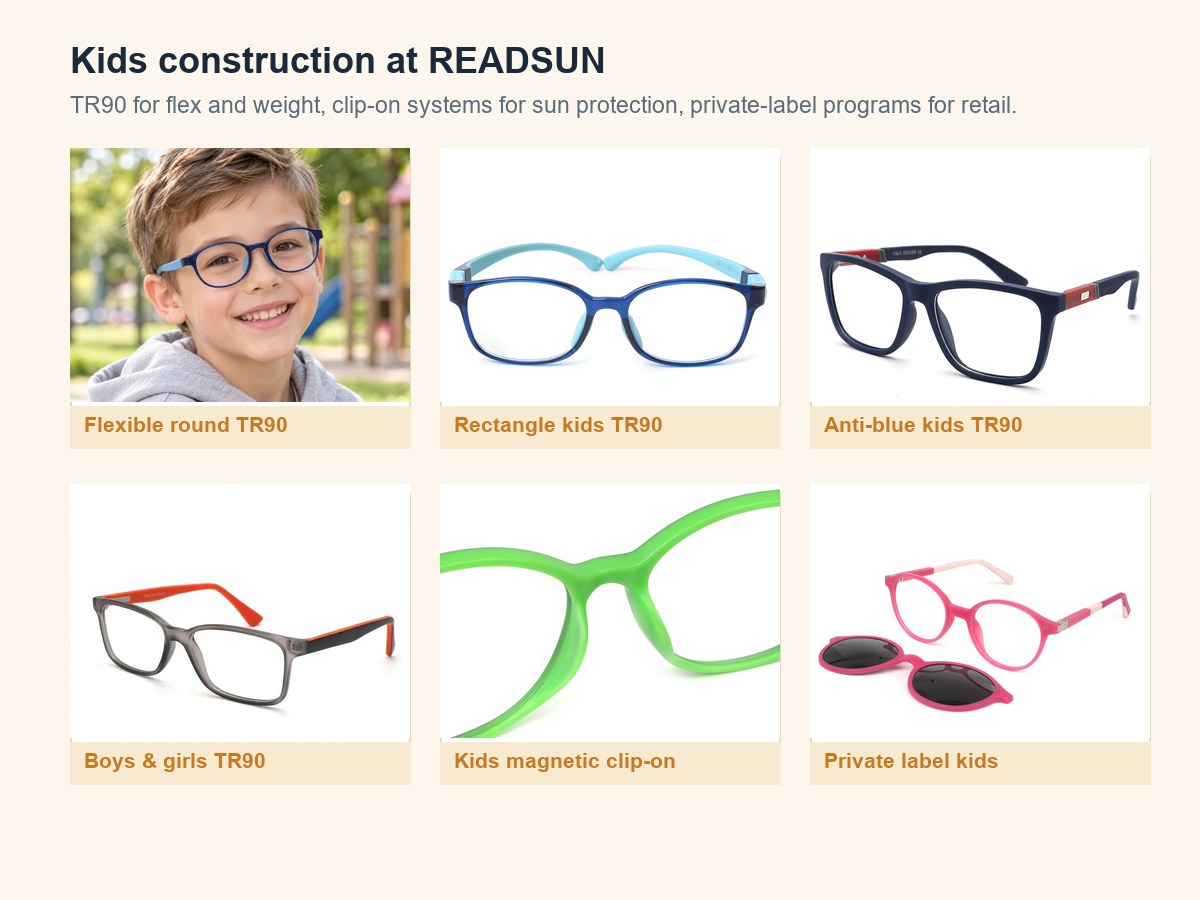
For 3–8 year olds, the construction that has emerged across the industry — and that we build at READSUN — pairs TR90 fronts and temples for ultra-light flex, acetate temple tips for the colour ranges that make frames wearable, and engineered hinge zones where stress concentrates. Beta-titanium enters at premium tiers and in the hinge hardware itself, exactly as the d'Or winner demonstrates. Acetate fronts still suit fashion-led tweens' lines, but for the core segment the TR90-plus-engineered-hinge pairing wins on survival — and survival is what parents repurchase on.
Five Specs to Demand from a Kids' Eyewear Supplier
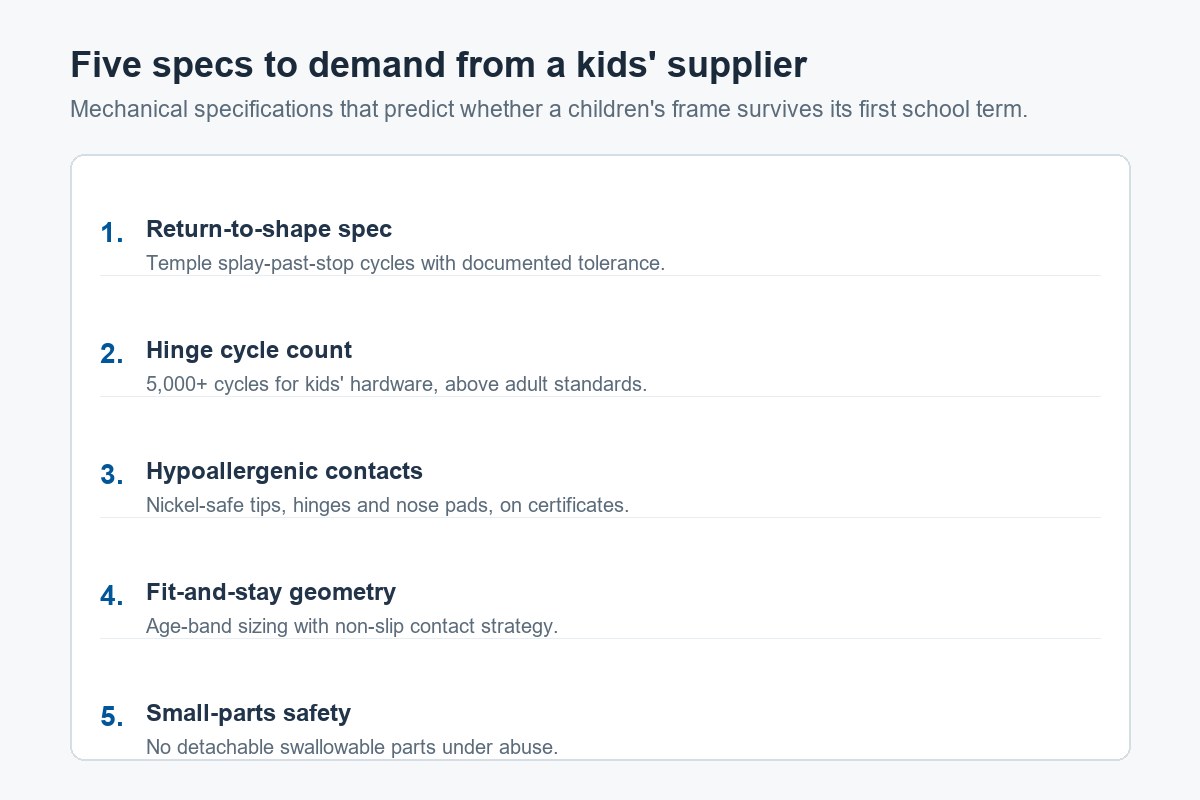
- Return-to-shape spec. Temple splay-past-stop cycles with documented return-to-shape tolerance — the single test that best predicts field survival.
- Hinge cycle count. 5,000+ open-close cycles for kids' hardware, higher than adult standards, because children's usage intensity is higher.
- Hypoallergenic contact materials. Nickel-safe tips, hinge contact points and nose pads, documented by material certificates.
- Fit-and-stay design. Bridge and temple geometry sized per age band with a non-slip contact strategy, so the frame stays placed during play.
- Small-parts safety. Components and fixings specified so no part detaches into a swallowable size under abuse — the non-negotiable line for anything worn by children.
Why Durability Sells Kids' Eyewear to Parents
Retailers who merchandise children's eyewear around a survival guarantee — backed by real specs rather than slogans — turn the category's weakness into its selling point. Parents compare failure stories, not frame shapes. Our kids' and infant frames buyer's guide covers the merchandising side, and the private label kids' playbook covers programme structure.
READSUN builds kids' and teenagers' programs on TR90 and acetate constructions with colour-selectable temple tips and engineered hinge zones — the same philosophy summarised here, running at factory scale. Review the kids' range on our product list or request kids' line samples via the inquiry form.