 Aviator
 Cat-eye
 Square
 Oval
 Rectangular
 Round


Years of industry experience

Designed to Reflect You
Global Eyewear Brands’ First Choice in Manufacturing
Home / All / Custom Reading glasses / Functional Reading glasses / Clip On Reader / TR90 Nose Clip Reading Glasses
TR90 Nose Clip Reading Glasses
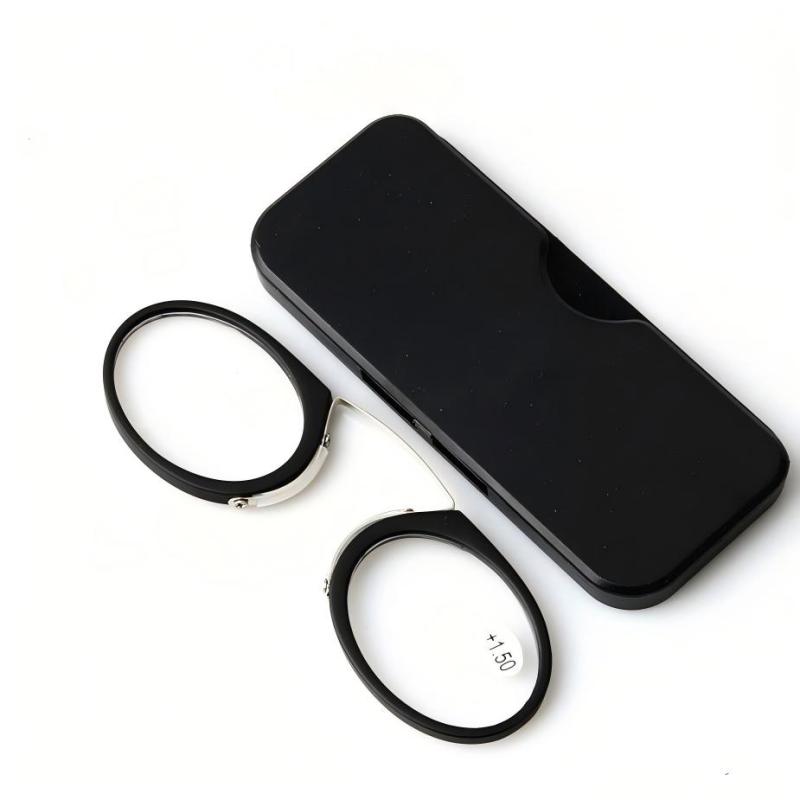

Detail Information
A TR90 nose clip reader that parks on the nose without temples, aimed at buyers who need magnification for a minute rather than for a working day.
Overview
Reading glasses are bought in multiples, so the design has to be simple, light and consistent across powers. This 16R076R reader uses a TR90 front in a compact format, and the lens powers are set at the moulding stage so every pair in a display matches the power printed on the card. A nose clip is held by spring tension alone, so the pad shape and the clip angle decide comfort; both are checked on a fitting set rather than by eye.
The mechanism matters more than the shape here. Six powers are offered from one mould, and each power is verified on a meter so the marking on the frame matches the lens inside. A reader that folds, clips or magnetically parks has to return to the same position every time, otherwise the wearer notices the misalignment before they notice the frame. Each mechanism is cycled on the sample and again in production, and the lens is checked for power accuracy rather than only for scratches.
Key Features
TR90 Front
The front is moulded in TR90, which keeps the weight low enough to wear on the nose for short tasks and holds the lens without a thick rim. Colour is set in the material, so a reader that lives in a bag or a pocket does not show a worn edge after a few months.
Bridge and Mechanism
The bridge is the whole mechanism on a reader: on a nose clip pair the pad shape and clip angle hold the frame without temples, and on a magnetic pair the parking force is set so the lens can be stowed one-handed without releasing on its own. Both are checked on a fitting set before production.
Power Accuracy and Lens Fit
Lenses are checked against a power meter rather than by eye, and the power is matched to the card and the temple marking. Because readers are sold by power, a mislabelled pair is a return, so the check is done at packing as well as at assembly.
Colour Range and Display Pack
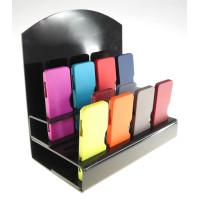
The range covers 3 colours, with the colour code recorded per power so a display can be replenished accurately. Logo and power text can be printed on the temple, and a display card or pouch can be packed with each pair.
Product Showcase
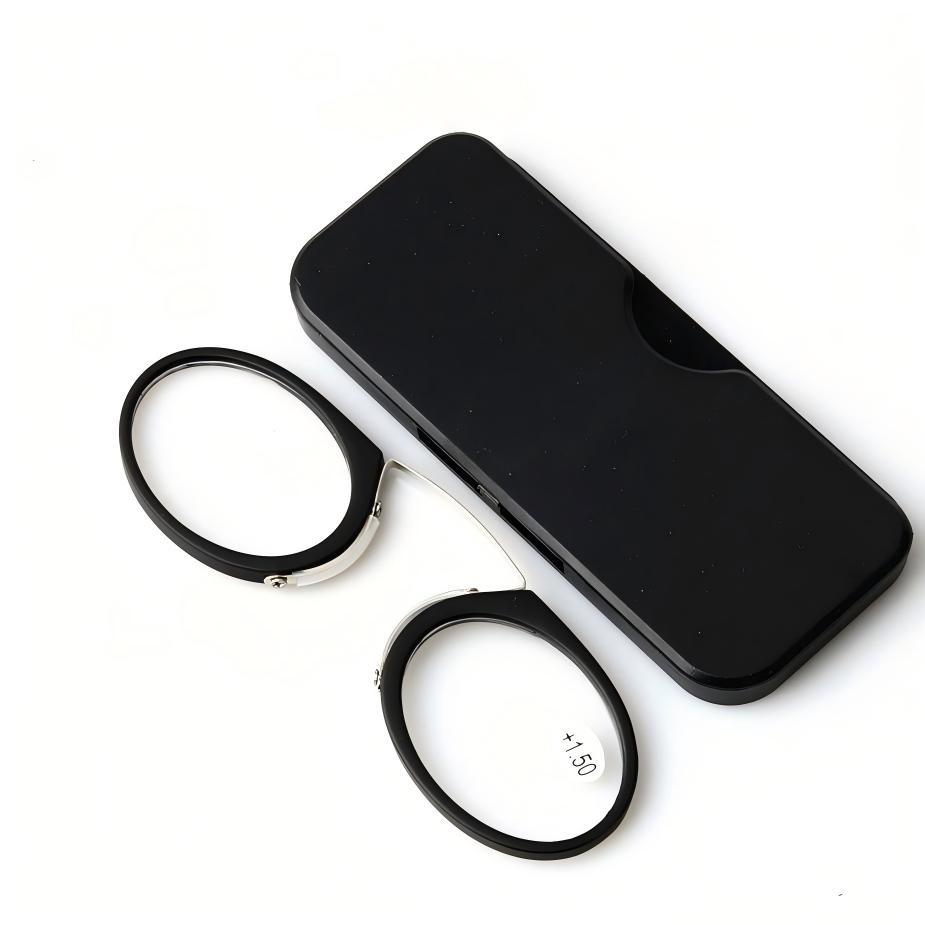

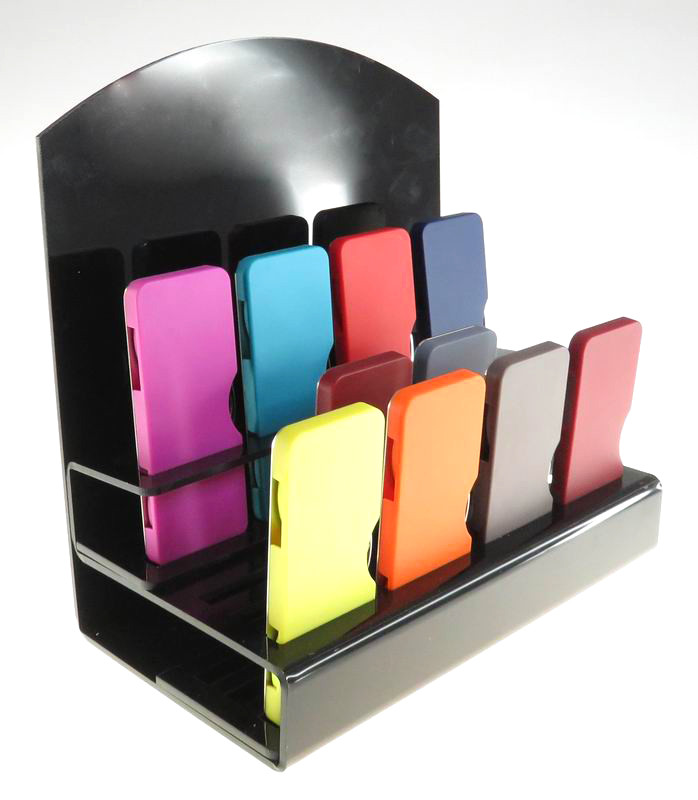
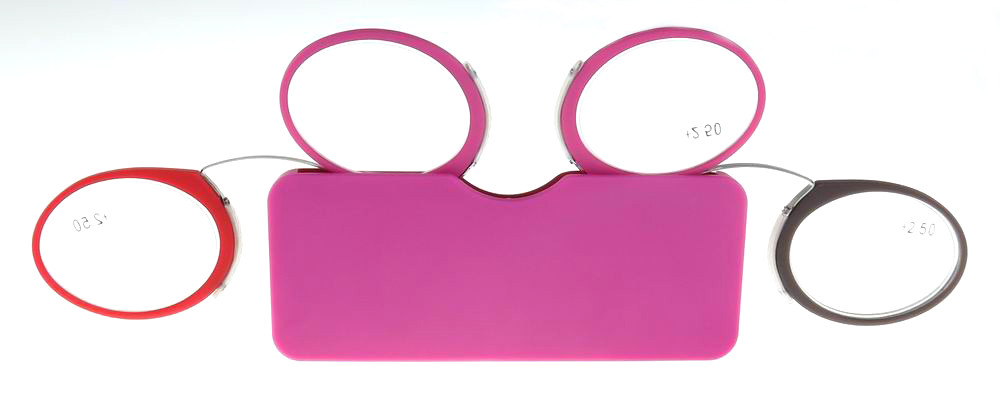
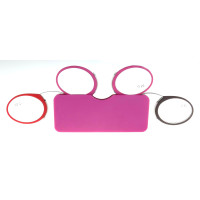
Views show the 16R076R sample and, where noted, a sister model from the same range, so the hinge position and temple profile can be compared before a sample is ordered.
Specifications
| Model No. | 16R076R |
|---|---|
| Category | Clip On Reader |
| Frame Material | TR90 |
| Lens | Reader lens, six powers available |
| Type | Nose clip, no temples |
| Powers | Six, verified on a meter |
| Size | Fixed by the mould, confirmed on the approved drawing |
| Colour | 3 colours |
| Customization | Logo, colour, temple, lens and packaging; artwork approved from a proof |
| MOQ | 600 pcs per model |
| Certification | CE and FDA |
| Lead Time | 30 days after order confirmation |
| Payment Terms | T/T, 30 percent deposit and 70 percent balance before shipment |
| Port | Shanghai / Ningbo |
The values above come from the current specification sheet for this model. A size marked as fixed by the mould cannot be changed without new tooling, while colour, logo, lens and packing remain adjustable within the stated minimum.
OEM & ODM Customization
A tr90 nose clip reader parks on the nose without temples, which is what makes it useful for someone who needs magnification for a minute at a time. The nose clip reading glasses are moulded in TR90 for grip, the clip reading glasses are checked for spring return, and the reading glasses range covers six powers.
Reader programmes live or die on the power range and the display. A buyer usually needs a set of powers from low to high, packed so a shop can hang or stack them, and the frame has to look consistent across the whole set. We quote the frame, the power set and the display packaging together so the landed cost per sellable unit is clear.
- Power range: the set of powers is agreed before production, and each power is checked against a meter before packing.
- Colour: 3 colours are available, with the colour code printed on the inner temple so a display can be replenished by code.
- Logo: temple print or a lens-corner mark, with the power text placed so it stays readable at retail.
- Packaging: display card, hanging blister, pouch or hard case can be packed per unit, with a carton plan per power.
- Private label: the reader can carry a house brand on the temple, the card and the pouch for a consistent shelf presence.
- Compliance: CE and FDA documentation is issued per model, covering the frame material and the lens power range.
Buyers who want the wider picture can review the OEM and ODM optical frames programme, which explains how tooling, sampling and documentation are handled across models.
Manufacturing & Quality Control
Production is organised around four checkpoints, and a frame cannot move to the next stage until the previous one is signed off. The process below is the same for a sample order and for a repeat run.
1. Frame and Lens Incoming Check
Fronts are checked for colour and surface defects, and lenses are inspected for scratches and edge chips before assembly. Lens blanks are verified against the power list so a mixed batch does not reach the line.
2. Assembly and Power Verification
Lenses are fitted and each pair is read on a power meter. The reading is compared with the marking on the temple and the card, and any pair outside tolerance is pulled from the line.
3. Mechanism and Fit Test
Hinges, clips and magnets are cycled to confirm return and alignment. The frame is opened and closed repeatedly, and the parked position is checked so the lens sits where the wearer expects.
4. Packing and Power Audit
Pairs are packed by power and colour, and a sample from each carton is checked against the packing list. A mislabelled carton is the most expensive error in this category, so the audit is done twice.
Inspection records are kept against the model number, so a question raised months after shipment can be traced back to the batch, the operator and the material lot. The full procedure is described under quality control.
Applications
- Pharmacies and drugstores selling readers on a spinner
- Optical practices offering a ready-made option
- Bookshops and gift shops with a reading accessory range
- Online stores selling multi-packs by power
- Corporate and hotel amenity programmes
- Export distributors supplying mixed-power displays
Readers are catalogued under custom reading glasses, and the clip and magnetic mechanisms are described alongside the custom clip on optical frames range.
FAQ
What is the MOQ for a mixed-power order?
MOQ is 600 pieces per model. A mixed-power order is normal in this category, and the power split is agreed at quotation stage so each power reaches its own minimum.
How is the power checked?
Every pair is read on a power meter at assembly and sampled again at packing, then compared with the temple marking and the display card. A pair outside tolerance is removed rather than relabelled.
Can the reader carry my brand?
Yes. The temple, the display card and the pouch can all carry a house brand, and artwork is approved from a printed proof before production.
Start Your Custom Order
Send the power range, the colour mix and the display format you need, and the reply includes the per-power carton plan, the logo options and the packed price.
Prefer to compare shapes first? The custom reading glasses page lists the rest of the range.
Build Your Private Label Eyewear Collection
- *Name
- *Phone
- *Title
- *Content
Why Choose READSUN as Your Optical Frame Manufacturing Partner
New products annually
Countries Exported Products
International Leading Brands Collaborated
Customer Satisfaction
Testimonials
Trusted by Partners Around the World














Products
Ability
