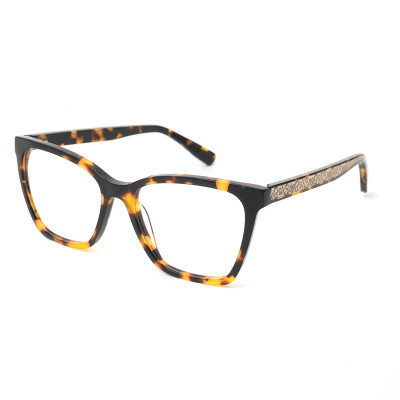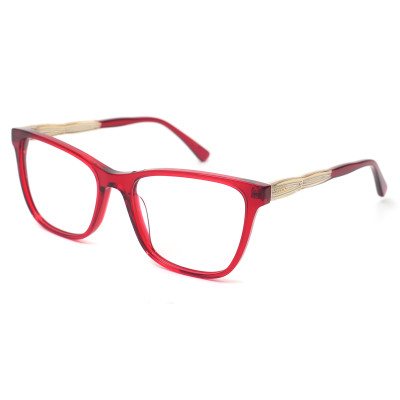
 Aviator
 Cat-eye
 Square
 Oval
 Rectangular
 Round
How to Choose an Optical Frame Manufacturer for Your Brand
How to Choose an Optical Frame Manufacturer for Your Brand
Choosing the right OEM optical frames manufacturer is not a procurement task — it is a brand-defining decision. Your optical frames sit on your customers' faces every day. They carry your logo, your positioning, and your promise of quality. Get the manufacturer wrong, and you get returns, refunds, and a damaged brand. Get it right, and you get a supply partner who scales with you for years.
The stakes are rising. As of 2026, importers must navigate an increasingly complex regulatory landscape: the EU has adopted EN 1811:2023 as the new harmonised test method for nickel release, social compliance audits like SMETA 4-P and BSCI are being requested by major retailers, and the global eyewear market continues its rapid expansion — projected to grow at a CAGR of 8.36%, reaching US$374.75 billion by 2032[reference:0].
This guide gives brand owners, sourcing managers, and e-commerce sellers a clear, practical framework for vetting an optical frames factory in 2026 — from factory vs trading company differences to the exact audit checklist that separates a high quality eyeglass frames factory from a high-risk one.
Key Takeaways
- Four pillars of evaluation. Material and process capability, tooling and customization depth, quality control system, and MOQ and lead time flexibility. A true factory partner answers production questions directly — a trading company does not.
- Factory vs trading company matters more than ever. Trading companies add 10–30% margin markup and offer limited customization flexibility. Ask precise production questions — a factory can answer with numbers, a trading company usually cannot.
- 2026 compliance standards are non-negotiable. For EU markets, EN 1811:2023 is the current nickel release testing standard. For US markets, FDA registration and impact resistance testing are mandatory. SMETA 4-P and BSCI social audits are increasingly requested by major retailers.
- Set AQL standards in writing. The industry standard for eyewear is AQL 2.5 for major defects (broken hinges, deep lens scratches) and AQL 4.0 for minor cosmetic defects. Document this in your purchase order before production begins.
- Sampling is how you de-risk the relationship. A capable factory delivers prototypes in 7–14 days. Be cautious of any supplier that promises “7-day mass production” without a sample stage.
Quick Answer: What to Look for in an Optical Frame Manufacturer
To choose a reliable eyeglasses frame factory, evaluate four pillars:
- Material and process capability — acetate, metal, titanium, injection. A full-category manufacturer covers multiple materials under one roof, which means consistent quality standards across your entire collection.
- Tooling and customization depth — OEM vs ODM, mold development, custom color matching. The depth of customization determines how unique your product can be.
- Quality control system — ISO 9001 baseline, CE and FDA compliance for EU/US markets, batch-level testing records.
- MOQ and lead time flexibility — the ability to start with manageable quantities and scale as demand grows.
A true factory optical frames partner will answer production questions directly — a trading company will not.
Optical Frames Factory vs Trading Company: What Brand Buyers Must Know
A trading company aggregates products from multiple factories and resells them. The advantage is wider range. The disadvantage is a 10–30% margin markup, limited customization flexibility, and vague answers to technical questions. A factory optical frames manufacturer makes the product. Their pricing is lower, their customization capability is higher, and their ability to solve production problems is direct and specific.
How to tell them apart: Ask a precise production question, such as “What is the daily output of your acetate polishing line?” A factory can answer with numbers. A trading company usually cannot.
There are two broad supplier models in China. A basic optical frame factory usually produces a wide range of entry-level and mid-market frames, often with simple tooling and flexible MOQ. A specialized frame factory focuses on one material or category — acetate, metal, titanium, or injection. Specialized factories often deliver better craftsmanship and tighter tolerances, while basic factories offer wider range and lower entry barriers.
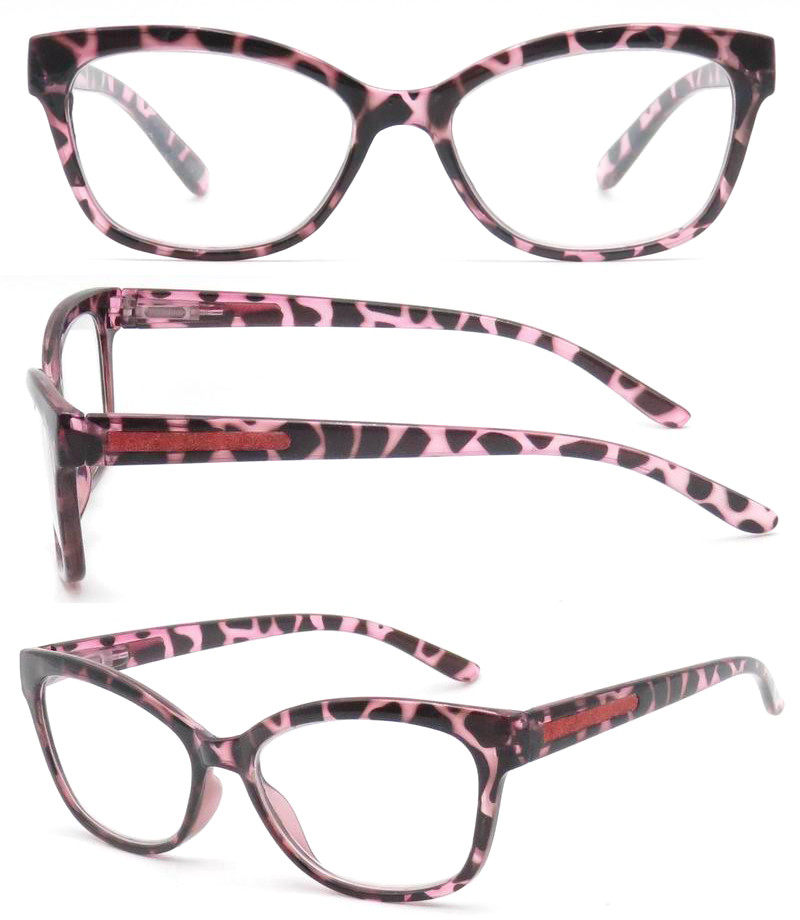
7 Questions to Ask Any Eyeglasses Frame Factory Before You Order
Before placing a first order with any optical frames factory, get clear answers to these seven questions:
- Are you the manufacturer or a trading company? Ask for a factory audit video or a live video call walkthrough of the production floor.
- What is your core material expertise? Acetate, metal, titanium, TR90, or injection — a basic optical frame factory may do one well; a full-category manufacturer covers several.
- What certifications do you hold? ISO 9001 is the baseline. CE and FDA compliance matter for EU and US markets. For EU markets, request nickel release test reports per EN 1811:2023, the current harmonised standard adopted by the European Commission under REACH Annex XVII[reference:1]. Ask for test reports on material safety and batch-level QC records.
- What is your MOQ for OEM orders? A classic optical frames factory may start at 300–600 pieces per color; a basic eyeglass frames factory may go lower for stock models.
- How long does a sample take? A capable eyeglasses frame factory can deliver prototypes in 7–14 days with in-house 3D prototyping.
- What is your QC process? Ask for inspection stages: incoming material check, in-process inspection, final AQL inspection. The industry standard for eyewear is AQL 2.5 for major defects and AQL 4.0 for minor cosmetic defects[reference:2].
- What happens if a batch fails? A serious optical eyewear glass frames factory has a defined rework or replacement policy. Define this in your contract before production begins.
Quality Standards to Check in a High Quality Eyeglass Frames Factory
Quality in eyewear is not visible in photos. It shows up in hinge alignment, temple curvature, acetate polish, and material consistency. A high quality eyeglass frames factory should demonstrate:
- Material traceability — knowing the source and grade of acetate, titanium, or stainless steel. For titanium frames, request material certificates to verify grade (pure titanium vs beta titanium), as this affects both weight and flexibility characteristics.
- Dimensional tolerance control — consistent 52-18-145 sizing across batches, not just first articles. Chinese national standard GB/T 14214-2019 specifies tolerance limits: lens horizontal dimension ±0.5 mm, inter-lens distance ±0.5 mm, and temple length ±2.0 mm.
- Surface finishing — no polish residue, no uneven plating, no color deviation between frame and temples. For metal frames, ask for plating thickness specifications (typically 3–5 microns for decorative layers) and salt spray test results.
- Batch testing — nickel release testing, hinge fatigue testing, and lens fitting checks. For EU markets, the current nickel release standard is EN 1811:2023, which requires nickel release below 0.5 μg/cm²/week for parts in direct and prolonged skin contact.
Social Compliance Audits: SMETA 4-P and BSCI
Major retailers and fashion groups increasingly require social compliance audits from their eyewear suppliers. Two of the most widely recognised standards are SMETA 4-P and BSCI.
SMETA (Sedex Members Ethical Trade Audit) 4-Pillar covers four modules: labour standards, health and safety, environment, and business ethics[reference:3]. A factory that has passed a SMETA 4-P audit demonstrates commitment to ethical manufacturing, responsible sourcing, and supply chain transparency. The audit is now used by businesses across more than 180 countries and 40+ industries as a key criterion for evaluating suppliers[reference:4]. BSCI (Business Social Compliance Initiative) is another rigorous audit framework widely accepted by European retailers.
When vetting a supplier for major retail partnerships, ask for their most recent SMETA or BSCI audit report. Verify the audit was conducted by a recognised third-party firm such as SGS, TÜV, or Bureau Veritas. The report should be less than 12 months old and show no critical non-conformances.
How READSUN Tests Every Basic Optical Frame Factory Batch
At READSUN Optical, every production batch passes through three checkpoints: incoming material verification, in-line assembly inspection, and final pre-shipment AQL sampling. Our 2,000 m² facility produces up to 150,000 high-end optical frames per month with 120+ skilled technicians. We maintain CE compliance with nickel release test reports available for every export order, and we partner with over 100 global brands including GUESS, GANT, FILA, and POLAROID.
From Vinyl Factory Eyewear Manufacturer to Finished Carton: Lead Times and MOQ
A vinyl factory eyewear manufacturer or any specialized optical frames factories partner should give you a realistic production timeline, not just an optimistic one. Typical lead times for a casual optical frams factory or classic optical frames factory order break down as follows:
| Stage | Typical Time |
|---|---|
| Design confirmation & tech pack review | 3–7 days |
| Sample development (OEM) | 7–14 days |
| Mold opening (new shapes) | 15–25 days |
| Mass production | 20–35 days |
| QC & packing | 3–5 days |
Be cautious of any optical frames for glasses factory that promises “7-day mass production” without a sample stage. Sampling is how you de-risk the relationship. Always confirm lead times in writing and factor them into your launch schedule, accounting for potential shipping and customs delays.
FAQ: Common Questions from Brand Buyers
What is the minimum order quantity for OEM optical frames?
Most OEM optical frames manufacturer partners start at 300–600 pieces per color for custom acetate or metal frames. Stock models from a basic optical frame factory may go as low as 100–200 pieces for trial orders. Factories set MOQs to cover the fixed costs of material procurement and production setup.
How long does it take to get a sample from an eyeglasses frame factory?
A capable eyeglasses frame factory delivers samples in 7–14 days. READSUN specializes in rapid prototyping with in-house 3D development. If a supplier quotes 30 days for a sample, their development process is likely outsourced or inefficient.
Can I audit a China optical eyewear glass frames factory remotely?
Yes. Ask for a live video call walkthrough of the production floor, QC station, and warehouse. A china optical eyewear glass frames factory with nothing to hide will accommodate this. Pay attention to whether work-in-progress trays have clear labels showing model code, color, and operation status — unlabeled trays are a red flag for order mix-ups. You can also hire a third-party inspection company such as SGS, TÜV, or Bureau Veritas to visit on your behalf.
What is the difference between OEM and ODM for optical frames?
OEM means you provide the design and the factory manufactures to your specs. ODM means you select from the factory's existing designs and customize colors, logos, and packaging. Both models are available from a full-category OEM optical frames manufacturer. Many brands start with ODM to validate market interest before transitioning to OEM for future collections.
How should inspection standards be set?
Define AQL levels, critical defects, major defects, and minor defects in your purchase order. The industry standard for eyewear is AQL 2.5 for major defects (including optical clarity issues, hinge integrity, and structural damage) and AQL 4.0 for minor cosmetic defects. Some buyers use stricter AQL 0.65–1.5 for high-value premium products. Put the standard in writing before production starts — your contract should specify the inspection standard, the timeframe for raising claims, the resolution process, and who bears the cost of return shipping.
Get a Factory-Direct Quote from READSUN Today
READSUN Optical is a full-category OEM & ODM optical frame manufacturer based in China, specializing in sheet acetate, metal, and injection frames for global brands. Founded by Mr. Steven Zhang, we have grown from a small workshop into a trusted eyeglasses frame factory serving partners in over 80 countries.
Our 2,000 m² facility produces up to 150,000 high-end optical frames per month with 120+ skilled technicians. Whether you are sourcing factory optical frames for a private label launch or scaling an existing collection, we support full-chain OEM/ODM customization and private labeling. Our team can turn design concepts into physical prototypes in as little as 7 days.
Explore our OEM/ODM services, review our manufacturing excellence, see our custom optical frame capabilities, or learn more about our factory.
Ready to start? Request a factory-direct quote and sample kit today.