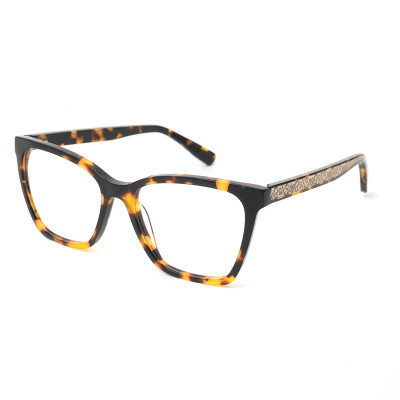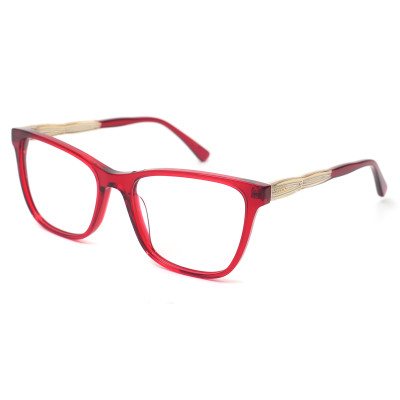
 Aviator
 Cat-eye
 Square
 Oval
 Rectangular
 Round
Eyeglasses Frame Factory Direct: How to Vet a China Optical Frame Supplier
Eyeglasses Frame Factory Direct: How to Vet a China Optical Frame Supplier
Factory-direct sourcing sounds like the obvious choice: lower prices, faster communication, and full customization. But in reality, not every “factory” is a factory. Some are trading companies with a polished website. Others are small workshops with no export compliance. For brand buyers, the real question is not “Is factory-direct cheaper?” but “How do I vet a China optical frame supplier before I wire a deposit?”
The stakes are higher than ever. As of 2026, importers must contend with evolving regulations including the EU’s updated EN 1811:2023 nickel release standard and increasingly rigorous social compliance audits such as SMETA 4-P and BSCI[reference:0][reference:1]. Choosing the wrong supplier doesn’t just risk product quality — it can trigger customs rejections, legal liability, and brand damage.
This guide gives you a practical vetting framework, built around the exact checks that separate a reliable china acetate optical frames factory from a high-risk supplier.
Direct answer: To audit a China optical frame factory, check the “three certificates and one process” — business license, material test reports, factory audit report, plus a complete quality control process. If any of these are missing or vague, treat it as a red flag.
Key Takeaways
- Verify legal identity before anything else. Compare the business license, registered address, and bank account against the quotation. A mismatch signals a trading company posing as a manufacturer.
- Audit the production process, not just the sample room. Walk the manufacturing flow from material storage to packed cartons. Look for labeled work-in-progress trays, controlled drawings, and revision records.
- Know the current compliance standards. For EU markets, nickel release must comply with EN 1811:2023. For US markets, FDA registration and impact resistance testing (21 CFR 801.410) are mandatory. Social audits like SMETA 4-P and BSCI are increasingly requested by major retailers.
- Set AQL standards in writing. The industry standard for eyewear is AQL 2.5 for major defects (optical clarity, hinge integrity) and AQL 4.0 for minor cosmetic defects. Document this in your purchase order.
- Request third-party inspection for first orders. Use SGS, TÜV, or Bureau Veritas for pre-shipment inspection. Never skip final inspection on a first order.
What a China Acetate Optical Frames Factory Really Means for Buyers
Acetate remains the most important material for premium optical frames. A genuine china acetate optical frames factory controls cutting, tumbling, polishing, hinge assembly, and final QC in-house. That matters because acetate frames are judged by feel: surface smoothness, color depth, temple alignment, and long-term shape retention. When production is outsourced across multiple workshops, consistency drops and defects rise.
For buyers, the difference is practical. A real acetate factory can adjust color, thickness, and polishing on the line. A trading company can only pass your request to someone else — and then wait.
China Basic Optical Frame Factory vs Specialized Frame Factory
There are two broad supplier models in China. A china basic optical frame factory usually produces a wide range of entry-level and mid-market frames, often with simple tooling and flexible MOQ. A specialized frame factory focuses on one material or category, such as acetate, metal, titanium, or injection frames. Specialized factories often deliver better craftsmanship and tighter tolerances, while basic factories offer wider range and lower entry barriers.
| Factory Type | Strength | Typical MOQ | Best For |
|---|---|---|---|
| Basic optical frame factory | Wide range, low MOQ, fast stock orders | 100–300 pcs | Trial orders, wholesale, budget lines |
| Specialized acetate factory | Better polish, color control, HD acetate | 300–600 pcs/color | Designer brands, premium collections |
| Full-category OEM factory | Acetate, metal, titanium, injection under one roof | 300–1,000 pcs | Brands scaling multiple categories |
How to Audit a China Acetate Optical Frames Factory
Auditing is not a single site visit. It is a sequence of checks designed to reduce risk before money changes hands. Use this seven-step process when vetting any china acetate optical eyeglasses frames factory.
- Initial screening: Confirm business license, factory address, and main product categories. Ask for a company profile with real production photos, not stock images. Cross-check the registered address against the quotation and bank account details[reference:2].
- Sample request: Order samples from current production. Check hinge feel, polish, color consistency, and weight.
- Reference checks: Ask for two or three existing B2B clients or export markets. A factory with nothing to hide will provide references.
- Video or on-site audit: Request a live video walkthrough of the production floor, QC station, and warehouse. If you can visit, inspect material storage and assembly lines directly. Ask to see work-in-progress trays — in a well-run factory, each tray shows a model code, color, quantity, and operation status[reference:3].
- Trial order: Place a small trial order before committing to mass production. This tests communication, lead time, and QC under real conditions.
- Pre-shipment inspection: Use AQL sampling or a third-party inspection company such as SGS, TÜV, or Bureau Veritas. For orders over 5,000 units, third-party pre-shipment audits are strongly recommended[reference:4]. Never skip final inspection on a first order.
- Contract and signing: Define specifications, inspection standards, rework policy, and delivery terms in writing before production begins.
China Acetate Square Frame Optical Glasses Factory Checklist
If you are sourcing square acetate frames, add these checks to your audit. A capable china acetate square frame optical glasses factory should be able to demonstrate:
- Dimensional consistency across bridge, lens width, and temple length. Chinese national standard GB/T 14214-2019 specifies tolerance limits: lens horizontal dimension ±0.5 mm, inter-lens distance ±0.5 mm, and temple length ±2.0 mm[reference:5].
- Clean hinge integration with no glue residue or misalignment.
- Even color across front and temples, especially on transparent or striped acetate.
- Polished edges with no sharp corners or visible tool marks.
- Batch-level QC records for each color and size.
Qualified Factory vs High-Risk Factory Signals
| Checkpoint | Qualified Factory Signal | High-Risk Signal |
|---|---|---|
| Business license | Matches factory name and address | Different entity or vague address |
| Material reports | Provides test reports on request | “No need, our quality is good” |
| Factory audit | Accepts live video or third-party audit | Refuses video walkthrough |
| QC process | Incoming, in-line, and final AQL inspection | Only “final check by eye” |
| Communication | Answers technical questions with data | Repeats sales phrases without specifics |
| Payment terms | Clear deposit and balance terms | Requests full payment upfront |
Environmental Protection Optical Frame Factory: Compliance to Verify
Sustainability claims must be backed by documentation. If you source eco-friendly frames, work only with a china environmental protection optical frame factory that can provide verifiable certifications. Depending on your market, ask for:
- GRS (Global Recycled Standard) for recycled materials. The standard requires at least 50% recycled content, full supply chain traceability, and compliance with environmental and social guidelines.
- REACH and RoHS compliance for EU markets.
- Nickel release test reports for metal components. For EU markets, the applicable standard is EN 1811:2023, which specifies a maximum nickel release of 0.5 μg/cm²/week for parts in direct and prolonged skin contact[reference:6].
- Material traceability documents for bio-based or recycled acetate.
- Packaging compliance if you use recycled or FSC-certified packaging.
Do not accept “eco” as a marketing word. Ask for the certificate number, issuing body, and validity date. For GRS certification, verify the certification scope includes the material type you are ordering.
Social Compliance Audits: SMETA 4-P and BSCI
Major retailers and fashion groups increasingly require social compliance audits from their eyewear suppliers. Two of the most widely recognised standards are SMETA 4-P and BSCI.
SMETA (Sedex Members Ethical Trade Audit) 4-Pillar covers four modules: labour standards, health and safety, environment, and business ethics[reference:7]. A factory that has passed a SMETA 4-P audit demonstrates commitment to ethical manufacturing, responsible sourcing, and supply chain transparency. BSCI (Business Social Compliance Initiative) is another rigorous audit framework widely accepted by European retailers[reference:8].
When vetting a supplier for major retail partnerships, ask for their most recent SMETA or BSCI audit report. Verify the audit was conducted by a recognised third-party firm such as SGS, TÜV, or Bureau Veritas. The report should be less than 12 months old and show no critical non-conformances.
Lightweight Optical Frame Factory: Material and Weight Specifications
Lightweight frames are a growing buyer preference, especially in Asia, Europe, and online retail. A reliable china lightweight optical frame factory should be able to specify material weight and suggest the right material for your target price and comfort level.
| Material | Typical Weight | Key Characteristics |
|---|---|---|
| Acetate | Medium | Premium feel, rich colors, adjustable |
| TR90 | Light | Flexible, impact-resistant, sport-friendly |
| Titanium | Very light | Hypoallergenic, corrosion-resistant, premium |
| Stainless steel | Medium-light | Durable, good for classic metal frames |
| PC / injection | Light | Low cost, design freedom, impact-resistant |
Ask for actual frame weights in grams for your target size. A factory that cannot provide weight data is guessing. For titanium frames, request material certificates to verify grade — pure titanium vs beta titanium — as this affects both weight and flexibility characteristics.
FAQ: Remote Audits, Inspection Standards, and Responsibility
How can I audit a China optical frame factory remotely?
Request a live video call, not a pre-recorded video. Ask the factory to walk through the production floor, show current work-in-progress orders, open material storage, and demonstrate the QC process. Pay attention to whether work-in-progress trays have clear labels showing model code, color, and operation status — unlabeled trays are a red flag for order mix-ups[reference:9].
You can also hire a third-party inspection company in China to visit on your behalf. Reputable firms include SGS, TÜV, Bureau Veritas, and Intertek.
How should inspection standards be set?
Define AQL levels, critical defects, major defects, and minor defects in your purchase order. The industry standard for eyewear is AQL 2.5 for major defects (including optical clarity issues, hinge integrity, and structural damage) and AQL 4.0 for minor cosmetic defects[reference:10]. Some buyers use stricter AQL 0.65–1.5 for high-value premium products[reference:11].
Common eyewear defects to specify include: hinge misalignment, color deviation, surface scratches, loose screws, size inconsistency, lens fitting gaps, and plating blemishes. Put the standard in writing before production starts. For key structural tests, require hinge durability of at least 5,000 open/close cycles and nickel release compliance per EN 1811:2011 or EN 1811:2023[reference:12].
Who is responsible if a batch fails?
Responsibility should be defined in your contract. A professional factory will offer rework or replacement for confirmed production defects. Avoid suppliers who refuse to discuss a defect policy before you order. Your contract should specify: the inspection standard (AQL level), the timeframe for raising claims (typically 7–14 days after receipt), the resolution process (rework, replacement, or credit), and who bears the cost of return shipping.
Work with READSUN's Audited Optical Frame Factory Direct
READSUN Optical is a full-category OEM & ODM eyewear manufacturer based in China. We support brand buyers with factory-direct acetate, metal, titanium, and injection frame production, backed by documented QC processes and export compliance. Our team can provide factory audit materials, live video walkthroughs, and sample kits before you commit to mass production.
Our 2,000 m² facility produces up to 150,000 high-end optical frames per month with 120+ skilled technicians, and we partner with over 100 global brands including GUESS, GANT, FILA, and POLAROID.
Explore our OEM/ODM services, review our manufacturing excellence, see our custom optical frame capabilities, or learn more about READSUN.
Ready to vet a real factory? Contact READSUN to request our factory audit materials and schedule a live video inspection.