Custom Sunglasses Manufacturing: A Complete Guide to Factory Sourcing for Your Brand
Entering custom sunglasses manufacturing is an exciting but complex step for any brand. This guide walks you through factory sourcing, OEM vs. ODM models, material choices, quality control, and sustainability — so you can make informed decisions that align with your brand's vision and quality standards. From first sketch to final shipment, the right manufacturing partner turns your concept into eyewear that stands out in a crowded market.
Key Takeaways for Custom Sunglasses Manufacturing
- OEM vs. ODM shapes your brand identity. OEM gives you full creative control; ODM offers faster, lower-cost market entry by rebranding existing designs.
- Material choice drives cost, performance, and positioning. Acetate, TR90, titanium, and recycled options each carry distinct trade-offs.
- A detailed tech pack is non-negotiable. Precise measurements, Pantone codes, and lens specs prevent costly production errors.
- Factory vetting matters more than price. Certifications, QC processes, and eyewear specialization outweigh a low unit cost.
- Quality control cannot be an afterthought. AQL inspections and sample approval protect your brand reputation.
- Sustainability is a growing imperative. Recycled materials and eco-friendly packaging differentiate your brand.
OEM vs. ODM: Choosing Your Custom Sunglasses Manufacturing Model
When launching or expanding a sunglasses brand, one of the first decisions is your manufacturing model. This comes down to two paths: OEM (Original Equipment Manufacturing) and ODM (Original Design Manufacturing). Understanding the difference saves time, avoids costly errors, and aligns production with your long-term brand vision.
OEM: Bringing Your Unique Custom Sunglasses Designs to Life
OEM is the path for brands prioritizing unique, proprietary designs. You provide the factory with detailed designs, specifications, and technical drawings. The factory executes your vision and turns your concepts into tangible products. You keep full control over:
- Exclusive Design: Frame shape, dimensions, and features are your intellectual property.
- Material Selection: You dictate the exact materials for frames, lenses, and components.
- Color & Finish: Full authority over color palettes, patterns, and surface finishes.
- Branding & Packaging: Logo placement, case design, and box specifications are fully customized.
This model suits established brands and new ventures that want to build identity around exclusivity. OEM means you are creating something 100% yours, not just adding a logo. The trade-off: higher upfront costs for new molds and tooling, longer development timelines, and higher MOQs. Buyers can review custom sunglasses options or explore our OEM & ODM eyewear services for full details.
ODM: Leveraging Existing Styles for Your Custom Brand
ODM, often called "private label," offers a faster and more cost-effective route to market. The manufacturer has a catalog of pre-designed styles. You select a model and customize it with your branding.
Typical ODM customizations include:
- Branding and Logos: Adding your brand to frames, lenses, and packaging.
- Colorways: Selecting from available frame and lens colors.
- Minor Modifications: Small adjustments to temple tips or nose pads, though the core design remains the factory's property.
ODM is ideal for startups and emerging brands that want to enter quickly, test product-market fit, and minimize upfront investment. Advantages include lower development costs, faster lead times, and lower MOQs. The trade-off is limited exclusivity — other brands may sell the same frame shape.
Which Manufacturing Model Fits Your Custom Sunglasses Vision?
Choosing between OEM and ODM is strategic. Neither is inherently superior; the right choice aligns with your goals, budget, and design capabilities.
| Factor |
OEM |
ODM |
| Design Ownership |
You own the exclusive design and IP |
Manufacturer owns the base design |
| Customization |
Full control over shape, materials, colors, details |
Limited to branding, colors, minor tweaks |
| Speed to Market |
Slower — design, prototyping, tooling |
Faster — leverages existing designs and molds |
| Upfront Investment |
Higher — mold and tooling fees |
Lower — minimal development costs |
| MOQ |
Typically higher |
Generally lower and more flexible |
| Exclusivity |
High — unique in the market |
Low to medium — shared base product |
| Best For |
Brands with strong design vision and long-term equity goals |
Startups, test markets, speed and cost efficiency |
Many successful brands use a hybrid strategy: start with ODM to validate the market, then transition to OEM as they grow and invest in unique designs.
From Concept to Creation: Essential Steps in Custom Sunglasses Manufacturing
Turning a raw idea into a finished pair of sunglasses requires planning, technical precision, and a deep understanding of materials and production. Every step — from first sketch to final quality check — matters.
Designing Your Custom Eyewear: Fashion, Sports, and Unique Styles
The design phase defines your product's purpose and identity. Frame shape is one of the most powerful visual elements. Whether you target high-fashion, athletic performance, or a niche market, design choices set the direction for the entire project.
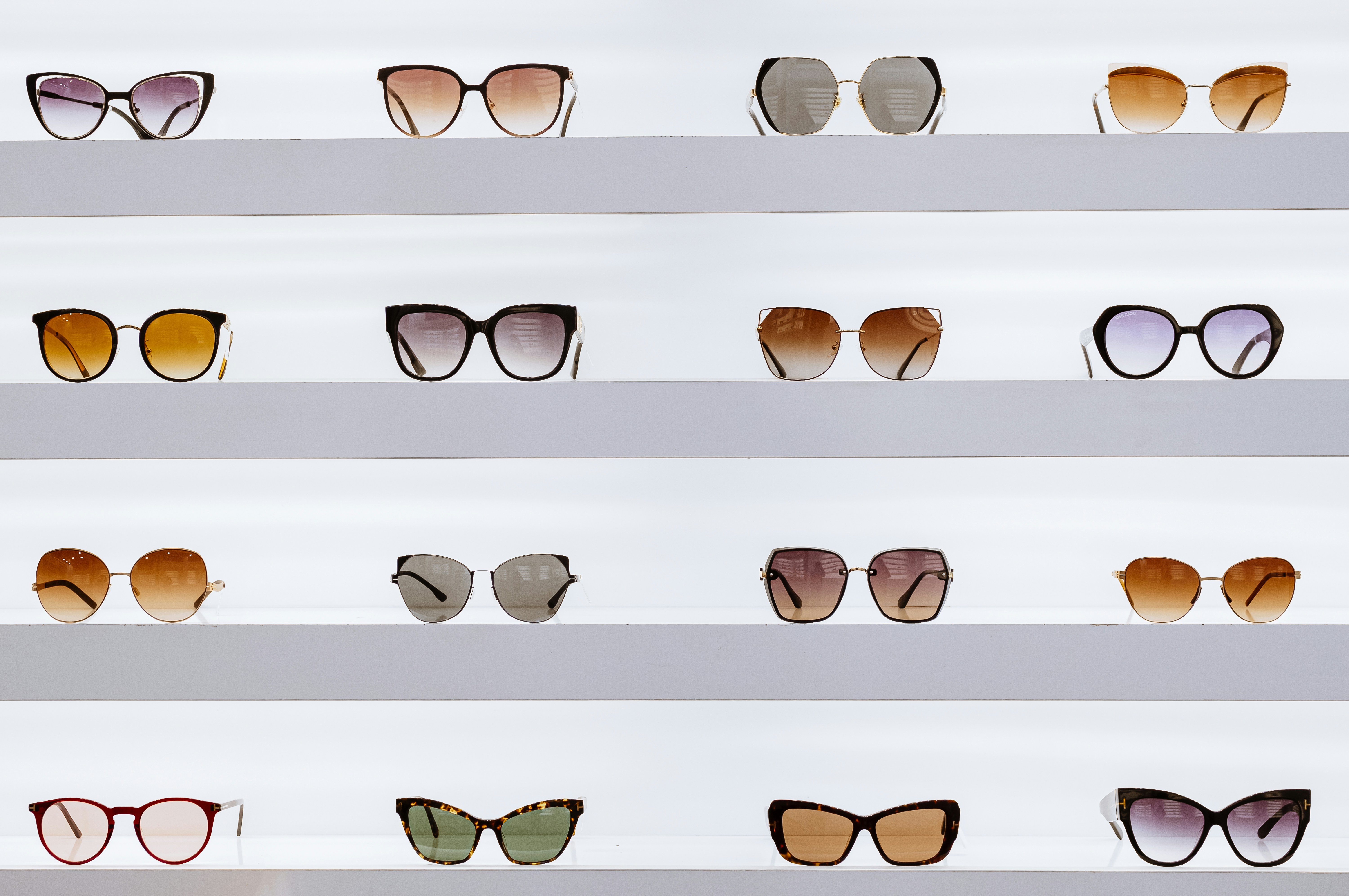
- Fashion Styles: 2026 trends favor both bold, oversized frames and refined, minimalist metal designs. Sculptural and geometric shapes — hexagons and octagons — are gaining popularity. Vintage-inspired silhouettes from the '70s and '90s continue to be reimagined with modern materials.
- Sports & Performance Styles: Function comes first. Key considerations include wrap for eye coverage, lightweight construction, temple grips, secure nose pads, and durability.
- Unique & Niche Styles: Distinct identity can come from classic shapes like browline or avant-garde geometric forms for individualistic tastes.
Whatever the style, the concept must be translated into detailed sketches or digital renderings showing front, side, and top views.
Choosing the Right Materials: Price, Performance, and Sustainability
Frame material influences weight, feel, durability, cost, and environmental footprint. Each material balances these properties differently.
- Plastics (Acetate & TR90): Cellulose acetate is a plant-based plastic known for vibrant colors, rich patterns, and a premium feel. It is hypoallergenic and can be adjusted for custom fit. TR90 is ultra-lightweight, durable, and flexible — ideal for sports and daily wear. Learn more about our acetate and metal frame materials.
- Metal (Stainless Steel, Titanium, Aluminum): Stainless steel and aluminum allow thin, sleek profiles. Titanium is a high-end option — extremely strong, lightweight, corrosion-resistant, and hypoallergenic.
- Wood & Bamboo: For natural aesthetics and sustainability, these materials offer warm, organic feel and unique grain patterns. Care must be taken regarding moisture exposure.
- Recycled & Bio-based Options: Recycled plastics, recycled aluminum, and bio-acetate reduce reliance on fossil fuels and minimize waste. Many factories now offer materials derived from castor seed oil.
| Material |
Key Characteristics |
Best For |
| Cellulose Acetate |
Premium feel, rich colors, hypoallergenic, adjustable |
Fashion-forward and luxury brands |
| TR90 Plastic |
Ultra-lightweight, flexible, durable |
Sports, active, and children's eyewear |
| Metal (Stainless Steel, Aluminum) |
Slim profiles, strong, classic look |
Minimalist and professional styles |
| Titanium |
Extremely lightweight and strong, hypoallergenic, corrosion-resistant |
High-end, performance, long-term wear |
| Wood / Bamboo |
Unique natural grain, eco-friendly, warm feel |
Niche, eco-conscious, artisanal brands |
| Recycled / Bio-based |
Sustainable, reduces waste, strong marketing story |
Brands targeting environmentally aware consumers |
The Manufacturing Process: Sourcing, Technical Design, and Quality Control
Once design and materials are chosen, production begins. This requires clear communication and rigorous oversight.
- Sourcing the Right Manufacturer: Finding a factory is about finding a partner, not just getting a quote. Verify they are a legitimate manufacturer, not a trading agent.
- Creating a Technical Design Pack (Tech Pack): The most critical document. A vague brief leads to errors. A comprehensive tech pack includes technical sketches from all angles, precise dimensions and tolerances, a full Bill of Materials (BOM), Pantone color codes, finish specifications, lens specifications, and exact logo placement details.
- Quality Control (QC): Integrated from the start — incoming material inspection, in-process checks, and final inspection for cosmetic defects, frame alignment, hinge function, and lens quality.
The Power of Samples: Ensuring Quality Expectations Are Met
Never commit to a bulk order without approving a pre-production sample (PPS). This is your most important quality control tool and serves as a physical contract for your entire order. The PPS should be made with the exact materials, tooling, and processes used in mass production.
Its purpose is to validate the manufacturer's capability, serve as the "golden sample" for the bulk order, and identify issues early. Only after formally approving this sample should the factory proceed with mass production.
Strategic Sourcing: Finding the Ideal Custom Sunglasses Factory Partner
Your factory is not just a vendor; it is a long-term partner whose capabilities, reliability, and communication style directly impact your success.
Global Manufacturing Hubs: China vs. Italy
China and Italy represent two of the world's most significant eyewear production hubs. The choice is not about which is "better," but which ecosystem best aligns with your brand's needs.
- China: A global powerhouse known for scale, cost-effectiveness, and production speed. Hubs like Wenzhou and Shenzhen house thousands of factories offering a complete supply chain. Ideal for high-volume, fast turnaround, and competitive pricing. Buyers should differentiate real factories from trading companies and vet carefully. See our Manufacturing Excellence for a closer look at our production capabilities.
- Italy: Particularly the Belluno district, is synonymous with luxury eyewear, craftsmanship, and design excellence. Revered for premium acetate expertise and advanced finishing. The "Made in Italy" label carries significant perceived value, but comes at higher cost and longer lead times.
| Factor |
Manufacturing in China |
Manufacturing in Italy |
| Primary Strength |
Scale, speed, cost-efficiency |
Craftsmanship, premium quality, design heritage |
| Best For |
High-volume, private label (ODM), budget-conscious OEM |
Luxury/premium brands, design-led collections |
| Key Hubs |
Wenzhou, Shenzhen, Danyang |
Belluno District |
| Cost |
Generally lower unit costs |
Generally higher unit costs |
| Lead Times |
Typically faster |
Typically longer |
| Brand Perception |
Varies; mass-market and efficiency |
High; luxury and quality |
MOQs and Pricing: Optimizing Your Budget for Custom Sunglasses Manufacturing
Understanding the financial side of production is crucial for managing budget and profitability.
- Minimum Order Quantity (MOQ): The minimum number of units a factory will produce for a single order.
- Typical MOQs: Custom acetate or metal sunglasses often start around 300 pieces per model, sometimes split across 2–3 colors. Injection-molded plastic (ODM) MOQs range 500–1,000 pieces. Fully custom new designs with new molds often have the highest MOQs — 1,000–3,000 pairs. Some suppliers offer lower MOQs of 100–250 at a higher unit price.
- Negotiating MOQs: Some are firm due to raw material minimums; others are flexible for long-term partners or with a small-run surcharge.
- Pricing: Unit cost varies from around $3 for simple promotional models to over $50 for premium custom titanium. Key factors:
- Frame Materials: Titanium and high-quality acetate cost more than standard plastics.
- Lens Technology: Polarized, photochromic, or prescription-ready lenses cost more than basic UV lenses.
- Customization: New molds carry upfront costs ($600–$3,000+) that factor into project budget.
- Order Volume: Higher quantities lower per-unit cost.
When requesting quotes, provide a detailed tech pack. Remember to calculate landed cost — including shipping, import duties, insurance, and inspection fees. Buyers can review OEM & ODM eyewear services for MOQ and pricing guidance.
Evaluating Potential Partners: Key Questions Before Committing
Vetting a manufacturing partner is critical due diligence. Base your evaluation on evidence, not promises.
- Experience and Specialization: Ask about experience with your product category and request examples of similar products.
- Certifications and Quality Control: Request copies of ISO 9001, CE, and FDA documents. Ask where inspections are performed.
- Capabilities and Customization: Get MOQ, pricing, sample fees, and lead times in writing. Test their depth of knowledge.
- Communication and Support: Identify your main point of contact and evaluate responsiveness during the inquiry stage.
- Factory Verification: Request a video call or virtual tour to confirm they are a real manufacturer.
Choosing a factory is about buying certainty, not just a low price. A partner who communicates clearly and demonstrates real understanding is invaluable.
Ensuring Excellence: Quality, Sustainability, and Partnership
Creating a premium product requires a relentless commitment to excellence — rigorous QC, sustainable practices, and trust with your manufacturing partner.
Quality Assurance: AQL Inspections for Bulk Orders
Quality assurance should not be left to chance. One bad batch can damage your reputation and cause costly returns. The Acceptable Quality Limit (AQL) is the most widely used industry standard.
AQL is a statistical sampling method. Instead of checking 100% of the order, an inspector checks a random sample to determine if the batch meets quality standards. Defects fall into three levels:
- Minor Defects (AQL 4.0 common): Imperfections unlikely to be noticed by the end customer.
- Major Defects (AQL 2.5 common): Flaws likely to cause a return — noticeable scratches, loose hinges, frame misalignment.
- Critical Defects (AQL 0 common): Safety or usability failures — sharp points, no UV protection.
Common eyewear defects include cosmetic issues (scratches, bubbles, uneven polishing), structural issues (frame misalignment, weak hinges, incorrect logo placement), and functional failures (stiff hinges, warped temples, distorted lenses). By defining AQL standards in your agreement, you create a measurable benchmark for acceptable orders.
Embracing Sustainability: Eco-Friendly Materials and Packaging
Sustainability is now a core expectation for many consumers. Eco-friendly practices reduce environmental impact and create a powerful point of differentiation.
Sustainable Frame Materials:
- Bio-Acetate: Premium look and feel with plasticizers derived from renewable sources.
- Recycled Plastics: Frames made from post-consumer plastics like water bottles and fishing nets.
- Recycled Metals: Recycled aluminum and stainless steel use significantly less energy than virgin ore.
- Natural Materials: Responsibly sourced wood and bamboo offer a unique, natural aesthetic.
Eco-Friendly Packaging: Use recycled and recyclable materials, biodegradable pouches, and sustainable cases made from recycled PET or cork.
Building a Lasting Relationship with Your Manufacturer
Your relationship with your manufacturer is a partnership. Effective communication prevents errors, reduces delays, and builds trust.
- Establish Clear Communication Channels: Determine your main point of contact and the best way to communicate.
- Provide Clear and Detailed Information: A comprehensive tech pack leaves no room for error. When giving feedback, be specific — use photos and marked-up drawings.
- Be Professional and Respectful: Fair negotiation and mutual respect foster loyalty and problem-solving.
- Schedule Regular Check-Ins: Stay informed about progress and address issues before they escalate.
- Pay on Time: Fulfilling financial obligations promptly builds trust.
A strong relationship leads to better service, more flexibility on MOQs, and greater commitment from your factory.
Frequently Asked Questions About Custom Sunglasses Manufacturing
What is a realistic budget to start a custom sunglasses brand?
The initial investment varies by model and complexity.
- ODM (Private Label): The most budget-friendly start. A small collection can launch for a few thousand dollars — stock (100–300 units at $5–$15 each), logo application, packaging, and shipping.
- OEM (Custom Design): Requires larger investment. Mold development ranges from $600 to over $3,000 per design. A typical single-style OEM launch starts from $5,000–$10,000, factoring design, sampling, molds, and first production run.
What is the typical Minimum Order Quantity (MOQ) for custom sunglasses?
MOQ depends on material and factory. As a general guide:
- Stock/ODM Orders: Promotional suppliers may offer MOQs as low as 50–150 units. For higher-quality stock frames, 100–300 units is more common.
- Custom Acetate/Metal (OEM): MOQs typically start at 300 pieces per model, often split across 2–3 colors.
- Custom Injection-Molded Plastic (OEM): To justify new molds, factories usually require 1,000–3,000 pieces.
How long does the custom sunglasses manufacturing process take?
The timeline varies by project complexity and factory capacity.
- ODM/Private Label: Fastest route — as little as 30–45 days from order confirmation to shipping.
- OEM/Full Custom: Longer. Design & tech pack: 1–4 weeks. Prototyping & sampling: 3–6 weeks. Sample revisions: 2–4 weeks per revision. Bulk production: 60–90 days after sample approval. Total: a realistic 4–6 months from concept to finished product.
What are the most common quality defects I should look for in sunglasses?
When inspecting samples or bulk production, check:
- Frame Alignment: Should sit flat without wobbling.
- Hinge Function: Should open and close smoothly — not too loose or tight.
- Surface Finish: Look for scratches, pits, bubbles, uneven color, or poor polishing.
- Lens Integrity: Check for scratches, distortion, or delamination. Lenses should fit snugly with no gaps.
- Logo and Branding: Verify placement, alignment, and clean finish.
How can I ensure my sunglasses provide proper UV protection?
UV protection is a safety feature, not a marketing claim.
- Specify UV400 Protection: The industry standard, blocking 99–100% of UVA and UVB rays. Specify in your tech pack.
- Request Third-Party Test Reports: Do not rely solely on a factory's in-house certificate. Ask for lab reports from a reputable third-party testing agency.
By understanding custom sunglasses manufacturing and strategic factory sourcing, you are equipped to develop high-quality, distinctive eyewear for your brand. The right manufacturing partner brings your vision to life, ensuring both profitability and customer satisfaction. Use this guide as a foundation for your sourcing success.

 Aviator
 Cat-eye
 Square
 Oval
Oval Rectangular
 Round
Round