 Aviator
 Cat-eye
 Square
 Oval
 Rectangular
 Round
Clip-On Sunglasses Frames Explained: Magnetic, Flip-Up and Slide-On Mechanisms
Eyewear Materials and Manufacturing Technology
Clip-on sunglasses look like a simple accessory, but the way the clip attaches to the frame is a small engineering system: a bridge mount, a pivot or magnet, and a lens edge that takes daily handling. Get the mechanism wrong and the best polarized lens still ends up in a drawer.
The Short Answer
Clip-on sunglasses frames use three attachment mechanisms. Magnetic clips snap onto a steel or magnetized bridge mount and release in one movement. Flip-up clips pivot on a hinge fixed to the frame bridge, letting the wearer lift the sun lens without removing it. Slide-on clips grip the frame rim or temple with thin friction rails and slide into place. Magnetic mounts lead on convenience, flip-up on one-hand operation, slide-on on cost and simplicity.
- Magnetic: fastest on-off, needs a metal mount or embedded magnets in the frame.
- Flip-up: stays attached all day, hinge quality decides its lifespan.
- Slide-on: cheapest and lightest, fit tolerance matters most.
Mechanism One: Magnetic Clip-Ons
A magnetic system hides small neodymium magnets in the clip bridge and either in the frame bridge or behind a thin steel plate laminated into the acetate. The clip snaps onto the mount with a light click and releases with one finger. Because there is no pivot to wear out, the mechanism itself rarely fails - what ages is magnet strength and the glue line that holds the magnet in place.
How it attaches
Two contact points on the bridge align with the mount; the magnets pull the clip into a fixed position, so alignment is repeatable every time.
Where it excels
Drivers, outdoor workers and anyone who toggles between indoor and sun use dozens of times a day.
Watch for
Magnet pull force below spec, and magnets glued rather than heat-set into acetate.
On the production side, magnetic mounts demand tighter tolerances than the other two systems, which is why metal-frame OEM plants and acetate factories with in-house assembly tend to lead this category.
Mechanism Two: Flip-Up Clip-Ons
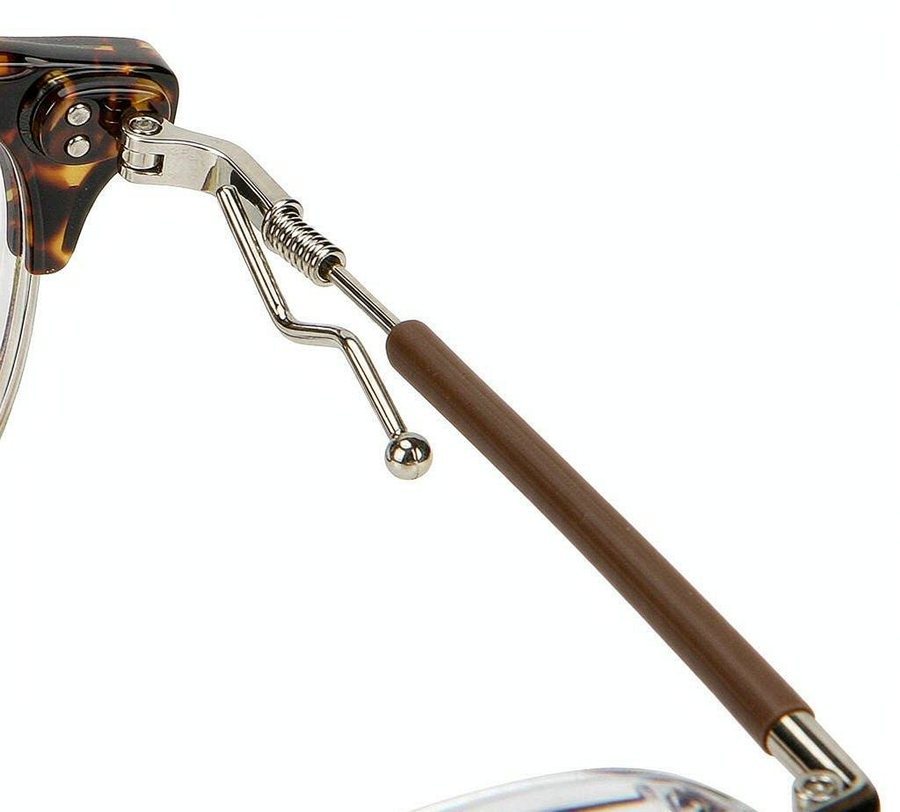
The flip-up design fixes a spring-loaded hinge to the frame bridge. The sun lens sits over the optical lens during wear and lifts upward when the wearer steps indoors, so the clip never leaves the frame. It is the traditional mechanism behind aviator and driving clip-ons, and it is still the choice for users who lose small parts.
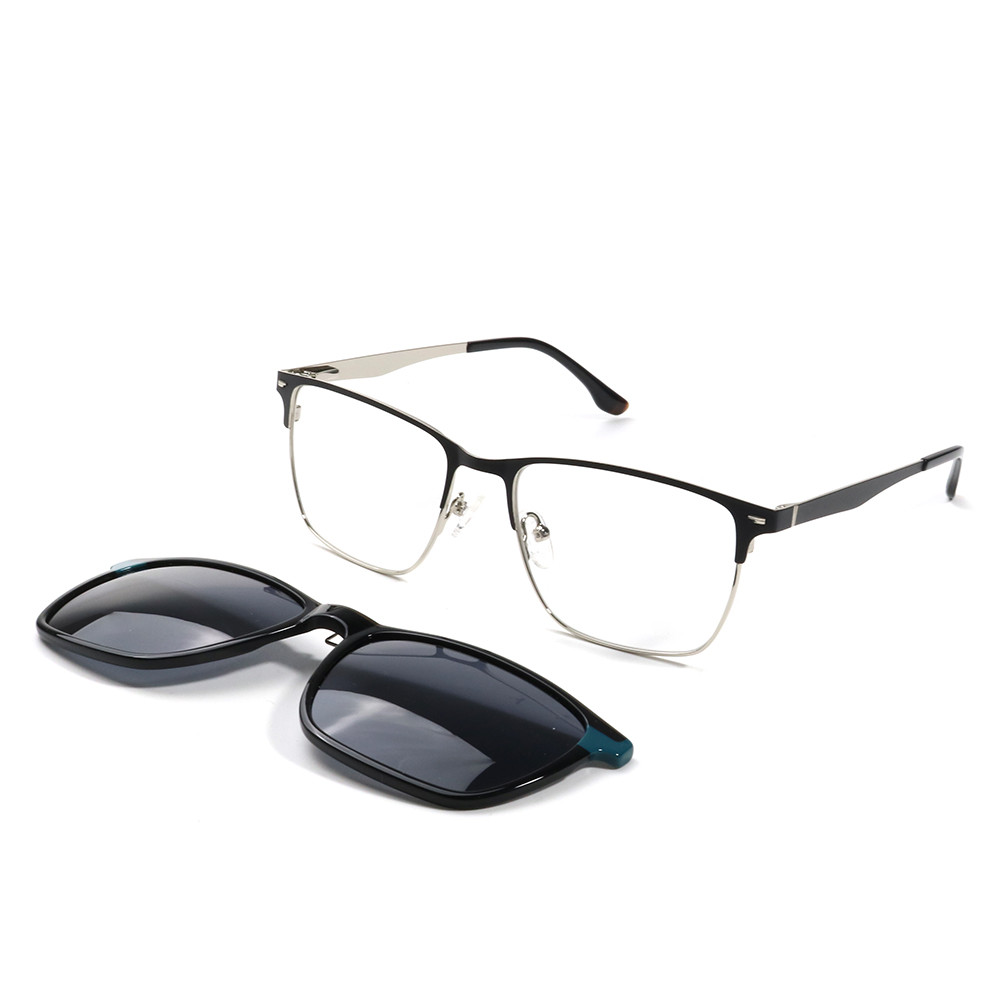
The engineering load sits on the hinge spring. A good flip-up holds its raised position on a bicycle ride and its lowered position against wind, then returns to spec after thousands of cycles. Ask suppliers for open-close cycle counts - it is the single most telling number for this mechanism.
Mechanism Three: Slide-On Clip-Ons
Slide-on clips use thin friction rails or flexible lips that grip the frame rim or hook over the temple. There is no mount to install, which makes the system inexpensive, light and easy to retrofit onto existing frames. The trade-off is fit: the rail must match the rim profile closely, or the clip shifts and scratches the frame finish over time.
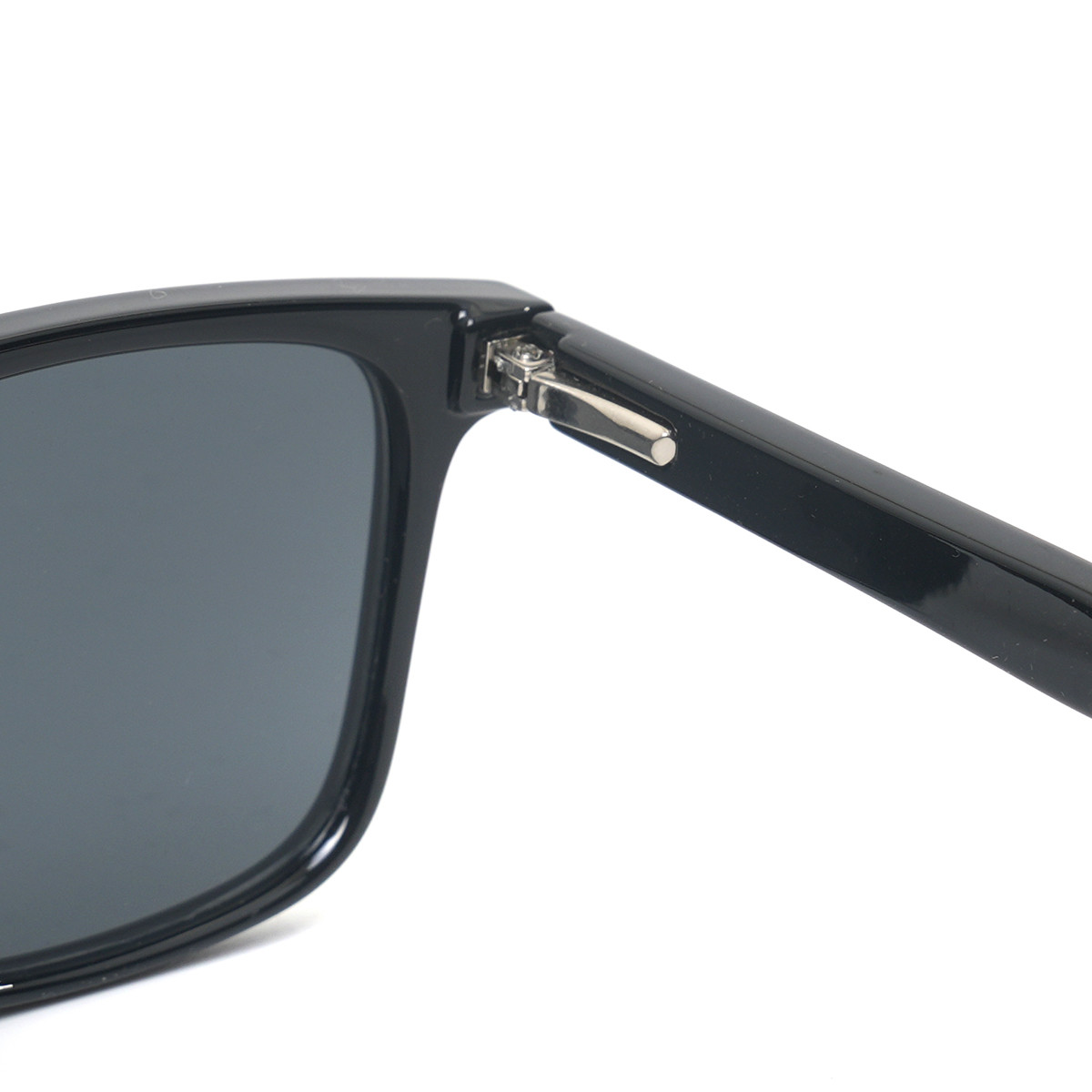
For brands, slide-on systems suit volume programmes and replacement-lens SKUs, while magnetic and flip-up suit premium lines where the clip is sold as part of the frame. Many collections ship one frame with a slide-on clip at entry price and a magnetic clip as the upgrade.
Choosing Between the Three: A Buyer's View
| Criteria | Magnetic | Flip-up | Slide-on |
|---|---|---|---|
| One-hand operation | Excellent | Excellent | Needs both hands |
| Retrofit to existing frames | Needs a mount | Needs a bridge mount | Yes, no modification |
| Wear item | Magnet glue line | Hinge spring | Rail friction |
| Tooling cost | High | Medium | Low |
| Best programme | Premium line | Driving and outdoor | Volume and promo |
Whichever mechanism a collection uses, the frame side must be engineered for it from the start: bridge thickness for magnet embedment, hinge seating for flip-ups, rim profile for slide rails. The lens and frame options guide shows how those choices pair with polarized lens grades.
Quality Tests Every Clip-On Mechanism Should Pass
- Pull-force test. Magnetic mounts are measured with a force gauge; the batch average must sit within the declared range, not just above a minimum once.
- Cycle test. Flip-up hinges are opened and closed to a declared count, then checked for holding force and alignment drift.
- Fit and scratch check. Slide-on rails are fitted and removed repeatedly on a production frame to confirm no finish damage or loosening.
- Salt-spray and sweat exposure. Clips sit close to the skin; plating and coatings are checked after humidity exposure for corrosion or colour shift.
- Optical verification. Polarization rate, UV400 blocking and lens distortion are confirmed on the assembled unit, not on loose lenses alone.
A supplier who runs these tests in-house and can show the records is usually the same supplier whose clips survive a season of daily wear - the trend data behind clip-on wholesale demand is built on programmes that passed them.
Common questions
Do magnetic clip-ons interfere with hearing aids or pacemakers?
The magnets used are small and sit at the bridge, but buyers serving medical-device users often offer a flip-up or slide-on alternative in the same collection.
Can any optical frame take a clip-on?
Mechanically almost any frame can take a slide-on clip, but flush fit needs the rim profile measured first. Magnetic and flip-up systems need the frame designed with a mount, which is why they are usually specified at the development stage with an experienced clip-on OEM partner.
Which mechanism lasts longest?
With a good glue line, magnetic mounts outlast hinges because there is no pivot wear; with a cheap magnet bond they fail fastest. The mechanism is only as durable as its assembly quality control.
Understanding clip-on sunglasses frames at the mechanism level changes how a collection is specified: magnetic for one-touch convenience, flip-up for all-day wearers, slide-on for reach and price. Decide the mechanism first, then the frame - and hold the supplier to cycle-test data before the deposit moves. For the private label route, the private label programme page shows how frame and clip systems are developed together.