 Aviator
 Cat-eye
 Square
 Oval
 Rectangular
 Round
China OEM Optical Frames: How to Source Metal & Titanium Manufacturers in 2026
China OEM Optical Frames: Metal & Titanium Manufacturer and Supplier Guide
China has become the world's leading source for OEM metal optical frames and titanium eyewear. For brand owners, sourcing managers, and private label buyers, understanding how to identify a real china oem metal optical frames manufacturer — not just a trading supplier — is the difference between a scalable supply chain and a costly experiment.
The global titanium metal glasses frames market was valued at approximately US$3.49 billion in 2025 and is projected to grow at a CAGR of 5.0% through 2032, with precision processing technology bringing costs down and expanding titanium from high-end into the mid-to-high-end market[reference:0]. This is a material category worth getting right.
This 2026 guide walks you through material choices, factory vetting, MOQ, pricing, lead times, and the common pitfalls that catch first-time buyers.
Key Takeaways
- China's metal frame advantage is structural. Complete supply chain from raw material to electroplating, advanced mold-making and tooling capability, and competitive labor costs at scale. For titanium, add two critical factors: material purity and welding craftsmanship.
- Manufacturer vs supplier matters. An OEM manufacturer owns the production line — stamping, welding, polishing, plating, and assembly. A supplier aggregates finished goods. The difference shows up in customization depth, communication speed, and problem-solving ability.
- Titanium market is growing at 5% CAGR. The global titanium metal glasses frames market was valued at US$3.49 billion in 2025 and is projected to reach US$5.1 billion by 2032. Precision processing technology is making titanium more accessible to mid-tier brands.
- Fake titanium is a real risk. Frames marketed as titanium but made with titanium alloy or titanium-coated steel are common. Verify with material test reports and weight checks — true titanium frames feel noticeably lighter.
- Plating thickness affects durability and skin safety. Ask for 3–5 micron specifications and salt spray test results. For EU markets, EN 1811:2023 is the current nickel release standard.
Why China OEM Metal Optical Frames Lead Global Eyewear Supply
China's advantage in metal and titanium eyewear manufacturing comes from three structural strengths: a complete supply chain from raw material to electroplating, advanced mold-making and tooling capability, and competitive labor costs at scale. For oem metal optical frames, this means faster development cycles and better unit economics than most alternative sourcing regions.
The 2026 landscape confirms this. At Mido 2026, 1,300 exhibitors from 50 countries showcased the latest eyewear innovations, with metal and titanium frames dominating the premium segments. Brands like Matsuda, Brunello Cucinelli, and Jacques Marie Mage led with titanium frames priced at US$675–1,075, demonstrating the strong margin story for metal eyewear[reference:1].
Direct answer: China's OEM metal frame advantage = complete supply chain + mold development capability + labor cost efficiency. For titanium frames, add two more critical factors: material purity and welding craftsmanship. Without these, a low price is meaningless.
OEM Metal Optical Frames Manufacturers vs Suppliers: Key Differences
An oem metal optical frames manufacturer owns the production line — stamping, welding, polishing, plating, and assembly. An oem metal optical frames supplier may only aggregate finished goods from multiple factories. The difference shows up in customization depth, communication speed, and problem-solving ability.
When you need a new hinge design or a specific titanium grade, a manufacturer can engineer it. A supplier can only quote what already exists. For brands planning seasonal collections or custom shapes, this distinction is critical.

OEM Titanium Optical Frames: Lightweight, Durable, Premium
Titanium is the premium choice for eyewear because it is roughly 40% lighter than stainless steel, highly corrosion-resistant, and hypoallergenic. For brands targeting high-end or long-wear segments, oem titanium optical frames offer a strong margin story and a clear consumer benefit.
The material is also evolving fast. Research from SEIKO, a leader in titanium technology, confirms that the titanium used in spectacle frames can appear in several compounds and compositions which largely determine the quality of a frame. The degree of purity of the titanium used is crucial to a frame's durability and style — while SEIKO uses pure titanium and high-grade alloys, other manufacturers sometimes resort to inferior alloys for reasons of cost, producing frames with thicker rims that break more easily under mechanical stress[reference:2].
Material comparison for metal frames:
- Stainless steel: Durable, cost-effective, widely used for classic and casual frames. Requires good plating to prevent nickel release. The most common material for entry to mid-market metal frames.
- Monel: Excellent corrosion resistance and strength, often used in premium metal frames. Higher material cost than stainless steel. A nickel-copper alloy that holds plating well.
- Titanium (pure or beta): Lightest, strongest, hypoallergenic. Best for premium, sports, and medical-style eyewear. Higher cost and more complex welding.
China OEM Titanium Optical Frames Supplier Vetting Checklist
Before you place an order with any china oem titanium optical frames supplier, verify these points:
- Ask for titanium material certificates and grade identification. Pure titanium carries 99.5% titanium content with 0.5% oxygen and nitrogen, making it very light and extremely durable. Beta titanium consists of approximately 74% titanium, 22% vanadium, and 4% aluminium — delivering superior flexibility and fatigue resistance. The two grades serve different design needs, so confirm which your factory is using[reference:3].
- Request welding samples. Poor titanium welding causes brittleness and breakage. Modern laser welding achieves repeatable positioning accuracy of up to ±0.02 mm, with minimal distortion suitable for thin titanium frames. A factory using five-axis laser welding can handle complex frame geometries with clean joints[reference:4].
- Check whether they have in-house plating or rely on subcontractors. In-house plating gives better control over color consistency and nickel release compliance.
- Ask for nickel release test reports if you sell in the EU or US. For EU markets, the applicable standard is EN 1811:2023, which supersedes the previous EN 1811:2011+A1:2015. Nickel release must not exceed 0.5 μg/cm²/week for parts in direct and prolonged skin contact[reference:5].
- Confirm whether they can produce both OEM titanium optical frames and metal frames on the same QC system. This ensures consistent quality standards across your collection.
China OEM Optical Frames Wholesale: MOQ, Pricing and Lead Time
Understanding the production workflow helps you set realistic expectations. A typical OEM project follows this path:
- Design confirmation — tech pack, material spec, color, logo, packaging.
- Mold opening — new shapes or hinge components. For metal frames, CNC-machined molds and bending jigs are required for each shape.
- Sample development — prototype and fit testing. A capable factory delivers samples in 7–14 days.
- Trial production — small batch to validate QC under real production conditions.
- Mass production — full order run. Metal frames typically require 25–40 days depending on complexity and plating requirements.
- Inspection and shipping — AQL inspection and export packing.
For oem optical frames wholesale programs, MOQ usually ranges from 300 to 600 pieces per color for custom metal or titanium models. Stock models may start lower. Lead time for samples is typically 7–14 days; mass production is 25–40 days depending on complexity and plating requirements.
OEM Optical Frames Wholesale Manufacturers Compared
| Factor | OEM Manufacturer | Trading Supplier |
|---|---|---|
| MOQ | 300–600 pcs/color | Often higher or inflexible |
| Customization depth | High — mold, material, hinge, logo | Limited to existing designs |
| Sample lead time | 7–14 days | 10–20 days or longer |
| Unit price | Factory-direct | Includes margin markup |
| Problem solving | Direct engineering support | Indirect, slower |
How to Avoid Common Sourcing Pitfalls: Fake Titanium and Plating Thickness
Two of the most common risks in metal eyewear sourcing are “fake titanium” and thin plating.
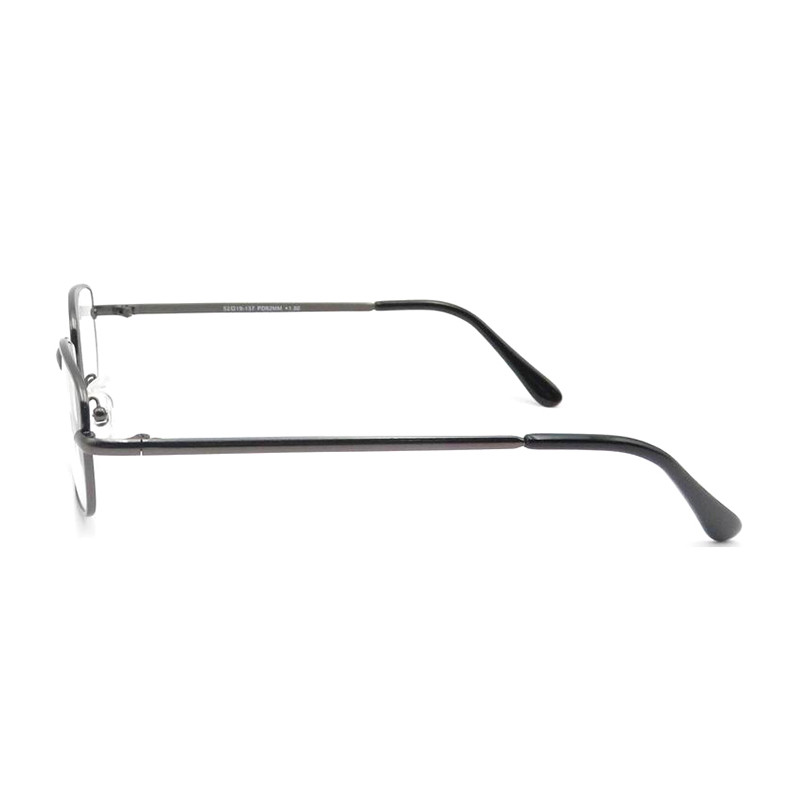
Fake titanium refers to frames marketed as titanium but made with titanium alloy or titanium-coated steel. In some cases, manufacturers claim to sell “Pure Titanium” frames although only inferior alloys are used. To verify, ask for material test reports and check weight — true titanium frames feel noticeably lighter. A pure titanium frame should carry 99.5% titanium content, while titanium-coated steel will show a different chemical composition in material certificates.
Plating thickness affects color durability and nickel release. Ask for plating thickness specifications (typically 3–5 microns for decorative layers) and salt spray test results. A reliable china oem metal optical frames manufacturer will provide these without hesitation.
For EU and US markets, nickel release compliance is non-negotiable. The current standard is EN 1811:2023, which the European Commission adopted for demonstrating compliance under REACH Annex XVII entry 27. Factories should be able to provide test reports showing nickel release below 0.5 μg/cm²/week for parts in direct and prolonged skin contact[reference:6].
FAQ: Titanium Frame Costs, MOQ, and Sample Lead Times
Why are titanium optical frames more expensive?
Titanium raw material costs more than stainless steel or monel, and titanium welding requires specialized equipment and skilled labor. Processing titanium is a craft that only very few truly master — many manufacturers use carriers containing nickel in their plating and welded joints as it is cheaper and easier than handling high-grade titanium[reference:7]. The result is a lighter, stronger, hypoallergenic frame — a premium product with a higher retail price point.
What is the OEM minimum order quantity for metal or titanium frames?
Most china oem metal optical frames manufacturers set MOQ at 300–600 pieces per color. For oem titanium optical frames, MOQ may be slightly higher due to material cost and production complexity.
How long does it take to get a sample?
A capable factory can deliver samples in 7–14 days. If a supplier quotes 30 days for a sample, their development process is likely outsourced or inefficient.
Can titanium frames be welded or repaired?
Titanium requires specialized welding equipment and skilled technicians. Traditional resistance brazing damages titanium's super-elastic properties and creates visible surface defects. Laser micro-welding has become the industry standard for titanium frames because it minimizes heat-affected zones and produces clean, high-strength joints without damaging the material's properties. Not all optical repair shops can handle titanium — ask your factory about repair support and whether they provide replacement parts.
Request Samples from READSUN's OEM Metal and Titanium Lines
READSUN Optical is a full-category OEM & ODM eyewear manufacturer based in China, with dedicated metal and titanium production lines. We are a direct manufacturer with in-house acetate processing, metal fabrication, injection molding, and assembly facilities, operating multiple production lines specializing in multi-material manufacturing[reference:8].
Our 2,000 m² facility produces up to 150,000 high-end optical frames per month with 120+ skilled technicians. We partner with over 100 global brands including GUESS, GANT, FILA, and POLAROID. We support oem metal optical frames, oem titanium optical frames, and oem optical frames wholesale programs for brands worldwide. Our in-house engineering team handles mold development, material sourcing, welding, plating, and final QC under one roof.
Explore our OEM/ODM services, view our custom optical frame capabilities, or learn more about our manufacturing excellence. You can also visit our about page to see our factory profile.
Ready to source metal and titanium frames factory-direct? Request samples and a quote from READSUN today.