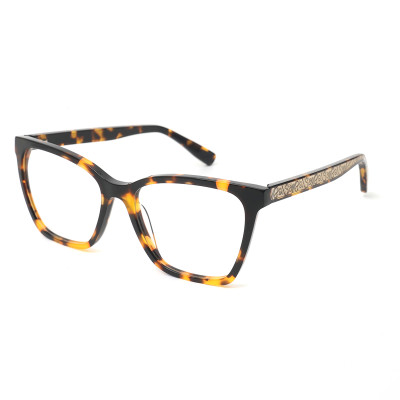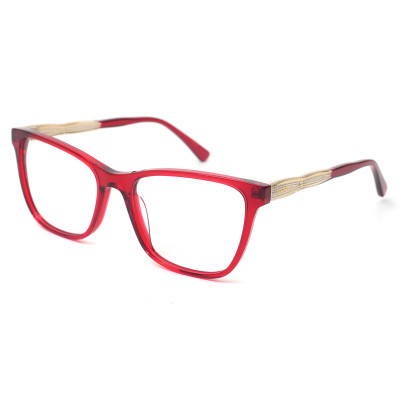
 Aviator
 Cat-eye
 Square
 Oval
Oval Rectangular
 Round
RoundAcetate Eyewear Manufacturers: How to Choose the Right Partner for Your Brand in 2026
Acetate Eyewear Manufacturers: How to Choose the Right Partner for Your Brand in 2026
Choosing the right acetate eyewear manufacturers is a defining decision for any eyewear brand in 2026. As demand grows for premium acetate frames, more factories and trading companies claim to offer the same services. This guide helps B2B buyers cut through the noise and select a partner that delivers consistent quality, reliable lead times, and long-term scalability.
A qualified acetate eyewear manufacturer must combine four core capabilities: in-house acetate sheet cutting, CNC precision milling, multi-stage polishing, and stable production scheduling. Without all four, quality and delivery tend to drift. Learn more about Readsun Optical as a China-based manufacturer with in-house acetate production.

What to Look for in Acetate Eyewear Manufacturers for Your Brand
Before requesting quotes, define your own requirements. Brand positioning, target retail price, annual volume, and SKU count should be written into a one-page brief. This prevents wasting time on factories that cannot match your level.
Self-Diagnosis Before Sourcing
Are you a startup testing 50 units per style, or a mature brand placing 5,000-unit orders? Do you need stock molds or fully custom designs? Answering these questions first will narrow your search to acetate optical frames manufacturers that actually fit your business model.
Factory Capability Checklist
Ask each potential partner for the following: acetate sheet supplier and color library, CNC machine count and daily capacity, polishing lines (barrel vs hand), MOQ per style, and standard lead time. A factory that cannot answer these clearly is likely a middleman.
Production Workflow: Six Key Stages
Acetate frame production follows a defined sequence: sheet cutting, heat forming, CNC milling, barrel polishing, hinge assembly, and final QC. Each stage has quality checkpoints. Buyers should review these checkpoints during factory audits or sample evaluations.
Acetate Eyewear Manufacturer vs Trading Company: Key Differences
| Factor | Direct Manufacturer | Trading Company |
|---|---|---|
| Price Structure | Factory-gate price, no markup | Includes commission and handling |
| Sample Control | In-house sampling, faster iteration | Depends on third-party factory |
| Quality Responsibility | Direct QC ownership | Limited visibility into production |
| Lead Time | Direct scheduling control | Buffer time may be added |
Why Famous Acetate Eyewear Manufacturers Keep Production In-House
Leading brands prefer manufacturers that control every stage in-house. When cutting, milling, and polishing happen under one roof, color consistency improves, defect rates drop, and production schedules stay predictable. This is especially important for transparent acetate and layered patterns, where even small temperature differences can cause visible color shifts.
How Handmade Acetate Eyewear Manufacturers Control Quality
Hand polishing remains irreplaceable for premium finishes. Artisan polishers read the material surface and adjust pressure and speed in real time. This skill cannot be fully replicated by machines, which is why handmade acetate eyewear manufacturers often command higher prices for their output.
Clear Acetate Optical Frames Manufacturers and Color Consistency
Clear and translucent acetate is the most demanding material for color consistency. Buyers should ask how the factory controls sheet batches, polishing temperature, and storage conditions. A reliable clear acetate optical frames manufacturer will have documented batch tracking and color-matching procedures.
Acetate Optical Eyeglasses Frames Manufacturers: Capabilities That Matter in 2026
In 2026, buyers expect more than basic production. Key capabilities include:
- Custom color development — matching Pantone or brand-specific shades across batches
- Mixed-material assembly — acetate fronts with metal temples or titanium cores
- Prescription-ready tooling — groove widths and lens shapes compatible with Rx lenses
- Low-MOQ trial runs — supporting new brands without forcing large inventory commitments
When evaluating acetate optical eyeglasses frames manufacturers, ask for samples from at least three different production batches. This reveals whether the factory maintains consistency over time.
Certifications and Compliance: What to Verify
For global distribution, acetate eyewear manufacturers should hold relevant certifications. Common requirements include ISO 9001 for quality management, FDA registration for the U.S. market, CE marking for Europe, and REACH compliance for material safety. During a factory audit, ask to see certificates, not just photocopies. Verify the certificate number and scope on the issuing body’s website.
Readsun Optical supports OEM/ODM custom acetate eyewear programs with ISO-certified production and export documentation. To request a compliance checklist, contact our B2B team.
MOQ, Lead Time, and Order Planning
MOQ and lead time vary by factory and project complexity. For stock molds with minor customization (logo, color), MOQs can start from 100–300 units. Fully custom designs typically require 500–1,000 units per style. Sampling takes 2–4 weeks; bulk production generally runs 45–60 days after sample approval.
Plan your first order with a factory that offers flexible MOQs and transparent scheduling. A partner that can scale from trial runs to bulk production without quality drift is more valuable than one offering the lowest initial quote.
FAQ
What is the typical MOQ for acetate eyewear manufacturers?
MOQ depends on mold type and customization level. Stock molds with logo/color changes often start at 100–300 units. Full custom designs usually require 500–1,000 units per style.
How long does sampling take?
Sampling typically takes 2–4 weeks after design confirmation. Complex custom shapes or multi-color laminated acetates may take longer.
What certifications should I verify?
ISO 9001, FDA registration, CE marking, and REACH compliance are common requirements. Always verify certificate numbers directly with the issuing body.
Can I visit the factory before placing an order?
Yes. On-site or virtual factory audits are standard practice for B2B buyers. Request a video walkthrough of the acetate cutting, CNC, and polishing areas.
Conclusion
Selecting the right acetate eyewear manufacturer requires a structured approach: define your needs, verify factory capabilities, check certifications, compare MOQs and lead times, and test with samples. A reliable partner will make your brand’s growth easier and more predictable.
Learn more about Readsun Optical, explore OEM/ODM custom acetate eyewear, or contact our B2B team to request a quote and production schedule.